
Strophocheilus calus Pilsbry, 1901
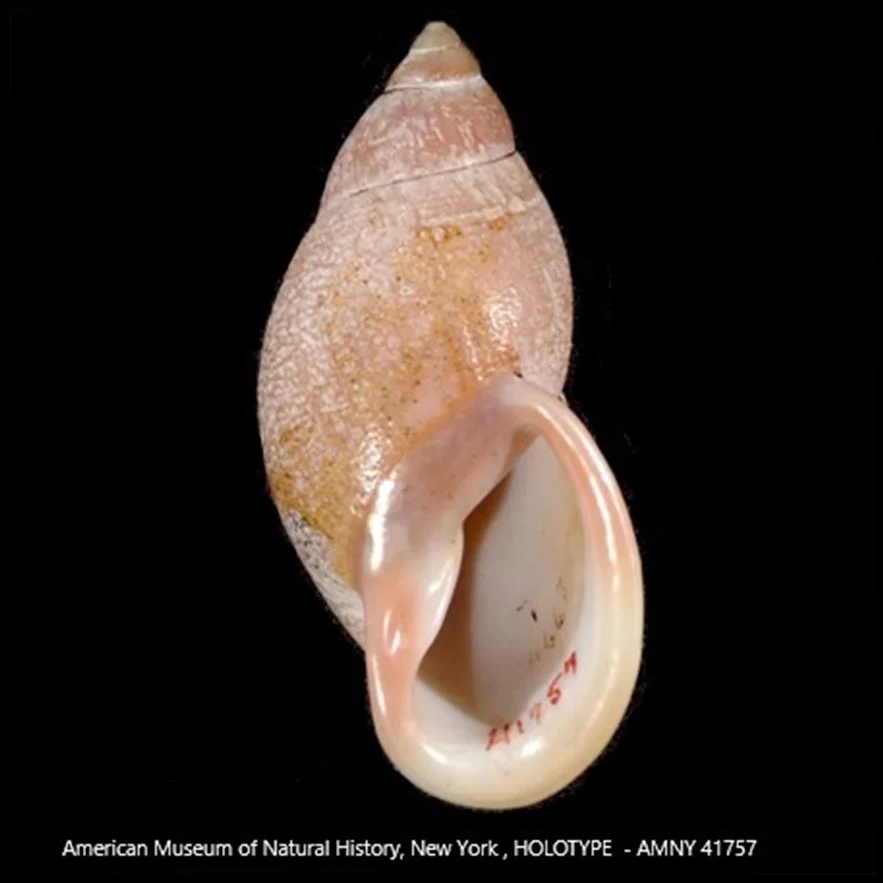
- (1) American Museum of Natural History, New York: HOLOTYPE de Strophocheilus calus, AMNH 41757
- Classe
- Gastropoda
- Família
- STROPHOCHEILIDAE
- Tamanho
- 62 mm
- Localidade tipo
- Brasil, Rio de Janeiro, Petrópolis
- Nome original
- Strophocheilus calus Pilsbry, 1901
Distribuição
Ocorrência: Bolívia (?), Brasil (Rio de Janeiro, Bahia, Paraná)
Sinônimos
- Helix pudica var. rhodostoma Moricand, 1836 (não se refere ao Helix rhodostoma Draparnaud, 1801)
Comentários
Bequaert, J. C. (1948) informa que os 5 exemplares de Helix pudica var. rhodostoma que foram enviados do Museu de Genebra para o Museum of Comparative Zoology, Harvard University- MCZ (MCZ 175520) são originários da Bahia (Coleção Moricand), enquanto o material examinado por ele (provavelmente mesmo lote do material tipo), foi coletado em Petrópolis, Rio de Janeiro.
Outro lote foi coletado em Caçatu, Antonina, Paraná (MCZ, coletor M.J. de Oliveira). Adicionalmente, em Pilsbry, 1901, p.292, a localidade é dada como Bolívia. Originalmente o tipo não possuía uma localidade específica, mas "Bolívia" foi escrito na etiqueta posteriormente. Maestrati, Simone & Bouchet. 2015 trazem uma possível observação de Strophocheilus calus em Alagoas, porém em publicação posterior essa observação foi identificada como Strophocheilus debilis Bequaert, 1948
Referências
Descrição original
- (Pilsbry, 1901): "Shell deeply rimate, oblong, solid and strong; rose colored, fading to white in some places, under a thin yellow cuticle (which is in large part wanting in the type). Surface densely sculptured with waved stria?, which on the last whorl anastomose to form a netted pattern ; conspicuously malleated. Whorls 5 1/3, the first obtuse above, the earlier 3 composing the conic, closely obliquely striate nepionic shell. Sutures moderately impressed, beyond the nepionic shell becoming progressively more oblique to the last half turn, which is about parallel to that above it, and ascends in front.
- Aperture slightly oblique, ovate, flesh-tinted within, peristome very broadly reflexed and recurved, the outer lip regularly arcuate, its upper half rose colored, lower half with the basal lip yellowish ; columellar margin broadly reflexed, standing free above the rather long curved, compressed axial chink, rose colored; columella strongly folded, the fold white; parietal wall covered with a thick, transparent, roseate enamel"
- Pilsbry, H. A. (1901-1902). Manual of conchology, structural and systematic, with illustrations of the species. Ser. 2, Pulmonata. Vol. 14: Oriental bulimoid Helicidae; Odontostominae; Cerionidae. pp 1-302, pls 1-62. Philadelphia, published by the Conchological Section, Academy of Natural Sciences. [pp. 1-64, Pl. 1-15, 07 Jun 1901; pp. 65-128, Pl. 16-21, 06 Sep 1901; pp. 129-192, Pl. 22-36, 29 Nov 1901; pp. 193-302, Pl. 37-62, 19 Apr 1902, disponível online em https://www.biodiversitylibrary.org/page/1098502 — p. 119, pl. 18, figs 46-47
- Simone, L. R. L. (2006). Land and Freshwater Molluscs of Brazil. Editora Gráfica Bernardi, FAPESP. São Paulo, 390 pp. página(s): 200
- Bequaert, J. C. (1948). Monograph of the Strophocheilidae, a Neotropical family of terrestrial mollusks. Bulletin of the Museum of Comparative Zoology. 100: 1–210., disponível online em https://www.biodiversitylibrary.org/page/28865640 — p. 34
- Maestrati, P., L. R. Simone & P. Bouchet. 2015. Moluscos (Mollusca) da Reserva Biológica de Pedra Talhada. In: Studer, A., L. Nusbaumer & R. Spichiger (Eds.). Biodiversidade da Reserva Biológica de Pedra Talhada (Alagoas, Pernambuco - Brasil). Boissiera 68: 163-172
Texto original da ficha (para comparação durante os testes)
CLASSE: GASTROPODA: TERRESTRE
FAMÍLIA: STROPHOCHEILIDAE
ESPÉCIE: Strophocheilus calus Pilsbry, 1901
Tamanho médio: 62 mm
Ocorrência: Bolívia (?), Brasil (Rio de Janeiro, Bahia, Paraná)
Localidade tipo: Brasil, Rio de Janeiro, Petrópolis
Descrição original:
(Pilsbry, 1901): “Shell deeply rimate, oblong, solid and strong; rose colored, fading to white in some places, under a thin yellow cuticle (which is in large part wanting in the type). Surface densely sculptured with waved stria?, which on the last whorl anastomose to form a netted pattern ; conspicuously malleated. Whorls 5 1/3, the first obtuse above, the earlier 3 composing the conic, closely obliquely striate nepionic shell. Sutures moderately impressed, beyond the nepionic shell becoming progressively more oblique to the last half turn, which is about parallel to that above it, and ascends in front.
Aperture slightly oblique, ovate, flesh-tinted within, peristome very broadly reflexed and recurved, the outer lip regularly arcuate, its upper half rose colored, lower half with the basal lip yellowish ; columellar margin broadly reflexed, standing free above the rather long curved, compressed axial chink, rose colored; columella strongly folded, the fold white; parietal wall covered with a thick, transparent, roseate enamel”
Comentários:
Bequaert, J. C. (1948) informa que os 5 exemplares de Helix pudica var. rhodostoma que foram enviados do Museu de Genebra para o Museum of Comparative Zoology, Harvard University- MCZ (MCZ 175520) são originários da Bahia (Coleção Moricand), enquanto o material examinado por ele (provavelmente mesmo lote do material tipo), foi coletado em Petrópolis, Rio de Janeiro.
Outro lote foi coletado em Caçatu, Antonina, Paraná (MCZ, coletor M.J. de Oliveira). Adicionalmente, em Pilsbry, 1901, p.292, a localidade é dada como Bolívia. Originalmente o tipo não possuía uma localidade específica, mas “Bolívia” foi escrito na etiqueta posteriormente. Maestrati, Simone & Bouchet. 2015 trazem uma possível observação de Strophocheilus calus em Alagoas, porém em publicação posterior essa observação foi identificada como Strophocheilus debilis Bequaert, 1948
Nome original: Strophocheilus calus Pilsbry, 1901
Sinônimos: Helix pudica var. rhodostoma Moricand, 1836 (não se refere ao Helix rhodostoma Draparnaud, 1801)
Fotos: (1) American Museum of Natural History, New York: HOLOTYPE de Strophocheilus calus, AMNH 41757
Fontes:
Descrição original: Pilsbry, H. A. (1901-1902). Manual of conchology, structural and systematic, with illustrations of the species. Ser. 2, Pulmonata. Vol. 14: Oriental bulimoid Helicidae; Odontostominae; Cerionidae. pp 1-302, pls 1-62. Philadelphia, published by the Conchological Section, Academy of Natural Sciences. [pp. 1-64, Pl. 1-15, 07 Jun 1901; pp. 65-128, Pl. 16-21, 06 Sep 1901; pp. 129-192, Pl. 22-36, 29 Nov 1901; pp. 193-302, Pl. 37-62, 19 Apr 1902, disponível online em https://www.biodiversitylibrary.org/page/1098502
página(s): 119, pl. 18, figs 46-47
Simone, L. R. L. (2006). Land and Freshwater Molluscs of Brazil. Editora Gráfica Bernardi, FAPESP. São Paulo, 390 pp. página(s): 200
Bequaert, J. C. (1948). Monograph of the Strophocheilidae, a Neotropical family of terrestrial mollusks. Bulletin of the Museum of Comparative Zoology. 100: 1–210., disponível online em https://www.biodiversitylibrary.org/page/28865640
página(s): 34
Maestrati, P., L. R. Simone & P. Bouchet. 2015. Moluscos (Mollusca) da Reserva Biológica de Pedra Talhada. In: Studer, A., L. Nusbaumer & R. Spichiger (Eds.). Biodiversidade da Reserva Biológica de Pedra Talhada (Alagoas, Pernambuco – Brasil). Boissiera 68: 163-172
Molluscabase: https://www.molluscabase.org/aphia.php?p=taxdetails&id=1448720