
Scutalus chango Araya & Breure, 2017
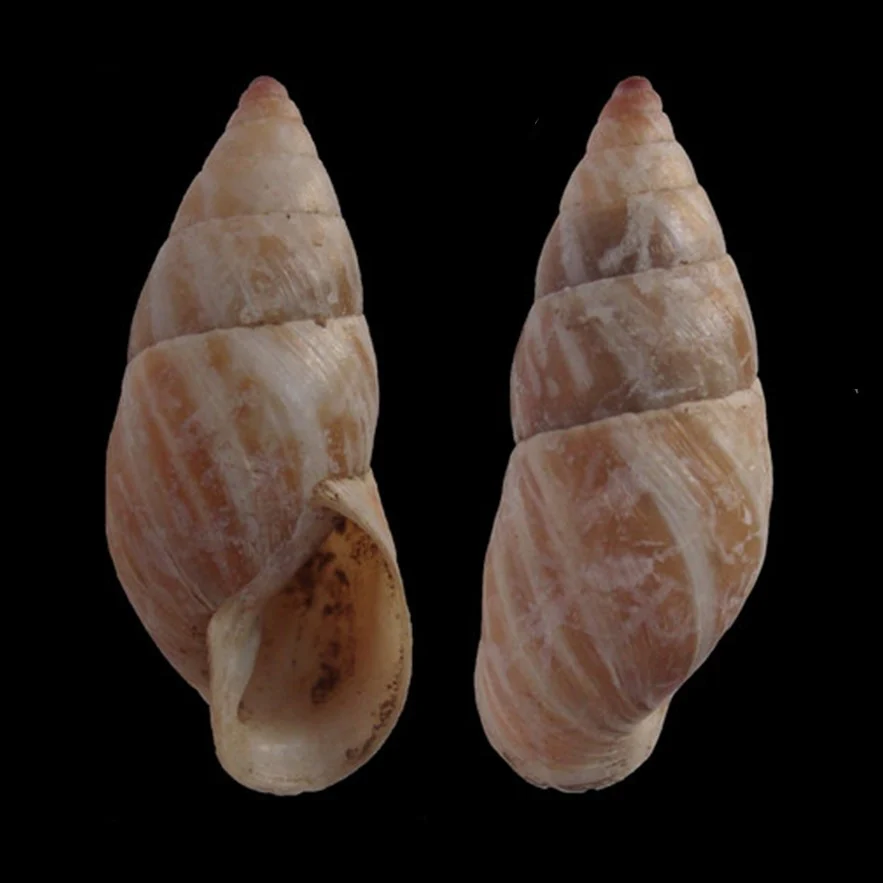
- (1) Araya & Breure, 2017: HOLOTYPE de Scutalus chango, MPCCL 020617, 24.8mm
- Classe
- Gastropoda
- Família
- BULIMULIDAE
- Tamanho
- 25.5 mm
- Altitude
- 150 - 170 m
- Habitat
- conhecido apenas na localidade-tipo; conchas encontradas em húmus sob pedregulhos e rochas caídas, geralmente perto de comunidades de cactos arborescentes Eulychnia iquiquensis, do grande arbusto suculento Euphorbia lactiflua e outras pequenas vegetações no sopé da Cordilheira Costeira Chilena
- Localidade tipo
- "foothills of the Chilean Coastal Range, north of Paposo (24°55′S; 70°30′W, altitude 150–170 m), Comuna de Taltal, Región de Antofagasta, northern Chile"
- Nome original
- Scutalus chango Araya & Breure, 2017
Distribuição
Ocorrência: Chile, Antofagasta
Etimologia
o nome da espécie é uma homenagem ao povo Chango (já extinto) que habitava áreas costeiras do norte do Chile, tendo suas últimas comunidades em Paposo, localidade-tipo da espécie
Descrição
(Araya & Breure, 2017): "Shell solid, of medium size (H up to 25.5 mm), elongated, fusiform; around 2.3 times as long as wide, rimate; upper whorls conic. Surface slightly shining; color white, corneous, or white with brownish axial streaks; sculptured by faint prosocline growth lines, crossed by minute and irregular spiral lines, forming a minutely reticulated surface in some areas. Irregular, longitudinal varices formed by old peristomes are occasionally found on the shell.
Protoconch one and a half whorls, white to reddish-brown in color; smooth to the naked eye but actually sculptured with many small nodules and striations visible under microscope. Protoconch-teleoconch boundary well defined; teleoconch sculptured with fine growth lines and minor spiral lines better visible on earlier whorls; sculpture more distinct toward the umbilical area.
Six and a half flat to slightly convex whorls; last whorl convex and slightly angulated, about 0.66–0.68 of total height. Sutures impressed but shallow. Aperture large (HA about 0.44–0.48 of H), subovate (around 1.50–1.54 times as long as wide), slightly oblique and prosocline (about 27°with columellar axis). Columellar margin short, dilated above, minutely rugose, with a columellar fold in the interior of its upper part. Terminations of peristome joined by a moderately thin, oblique, parietal callus. Outer lip expanded and reflexed, sharp, often with the internal margin thickened. Umbilicus narrow and very deep. Soft parts unknown"
Figuras
Araya & Breure, 2017: (A-H) Scutalus chango HOLOTYPE MPCCL 020617; (I) PARATYPE 5 MPCCL 030617D; (J,K) PARATYPE 1 MPCCL 030617A; (L-M) PARATYPE 2 MPCCL 030617B (espécime juvenil); (O-Q) PARATYPE 3 MPCCL 030617C (espécime juvenil)
Referências
Descrição original
- Araya, J. F. & Breure, A. S. H. (2017). A new terrestrial snail species (Gastropoda: Bulimulidae) from the Región de Antofagasta, northern Chile. PeerJ. 5: e3538., disponível online em http://dx.doi.org/10.7717/peerj.3538 — p. 4, figs 4A-?Q, 5A-?D
Texto original da ficha (para comparação durante os testes)
CLASSE: GASTROPODA: TERRESTRE
FAMÍLIA: BULIMULIDAE
ESPÉCIE: Scutalus chango Araya & Breure, 2017
Tamanho médio: 25.5 mm
Ocorrência: Chile, Antofagasta
Localidade tipo: “foothills of the Chilean Coastal Range, north of Paposo (24°55′S; 70°30′W, altitude 150–170 m), Comuna de Taltal, Región de Antofagasta, northern Chile”
Altitude: 150 – 170 m
Habitat: conhecido apenas na localidade-tipo; conchas encontradas em húmus sob pedregulhos e rochas caídas, geralmente perto de comunidades de cactos arborescentes Eulychnia iquiquensis, do grande arbusto suculento Euphorbia lactiflua e outras pequenas vegetações no sopé da Cordilheira Costeira Chilena
Nome original: Scutalus chango Araya & Breure, 2017
Etimologia: o nome da espécie é uma homenagem ao povo Chango (já extinto) que habitava áreas costeiras do norte do Chile, tendo suas últimas comunidades em Paposo, localidade-tipo da espécie
Zoobank: urn:lsid:zoobank.org:act:E70CF791-7574-45C4-A393-B5F4F3C6E94B
Descrição:
(Araya & Breure, 2017): “Shell solid, of medium size (H up to 25.5 mm), elongated, fusiform; around 2.3 times as long as wide, rimate; upper whorls conic. Surface slightly shining; color white, corneous, or white with brownish axial streaks; sculptured by faint prosocline growth lines, crossed by minute and irregular spiral lines, forming a minutely reticulated surface in some areas. Irregular, longitudinal varices formed by old peristomes are occasionally found on the shell.
Protoconch one and a half whorls, white to reddish-brown in color; smooth to the naked eye but actually sculptured with many small nodules and striations visible under microscope. Protoconch-teleoconch boundary well defined; teleoconch sculptured with fine growth lines and minor spiral lines better visible on earlier whorls; sculpture more distinct toward the umbilical area.
Six and a half flat to slightly convex whorls; last whorl convex and slightly angulated, about 0.66–0.68 of total height. Sutures impressed but shallow. Aperture large (HA about 0.44–0.48 of H), subovate (around 1.50–1.54 times as long as wide), slightly oblique and prosocline (about 27°with columellar axis). Columellar margin short, dilated above, minutely rugose, with a columellar fold in the interior of its upper part. Terminations of peristome joined by a moderately thin, oblique, parietal callus. Outer lip expanded and reflexed, sharp, often with the internal margin thickened. Umbilicus narrow and very deep. Soft parts unknown”
Fotos: (1) Araya & Breure, 2017: HOLOTYPE de Scutalus chango, MPCCL 020617, 24.8mm
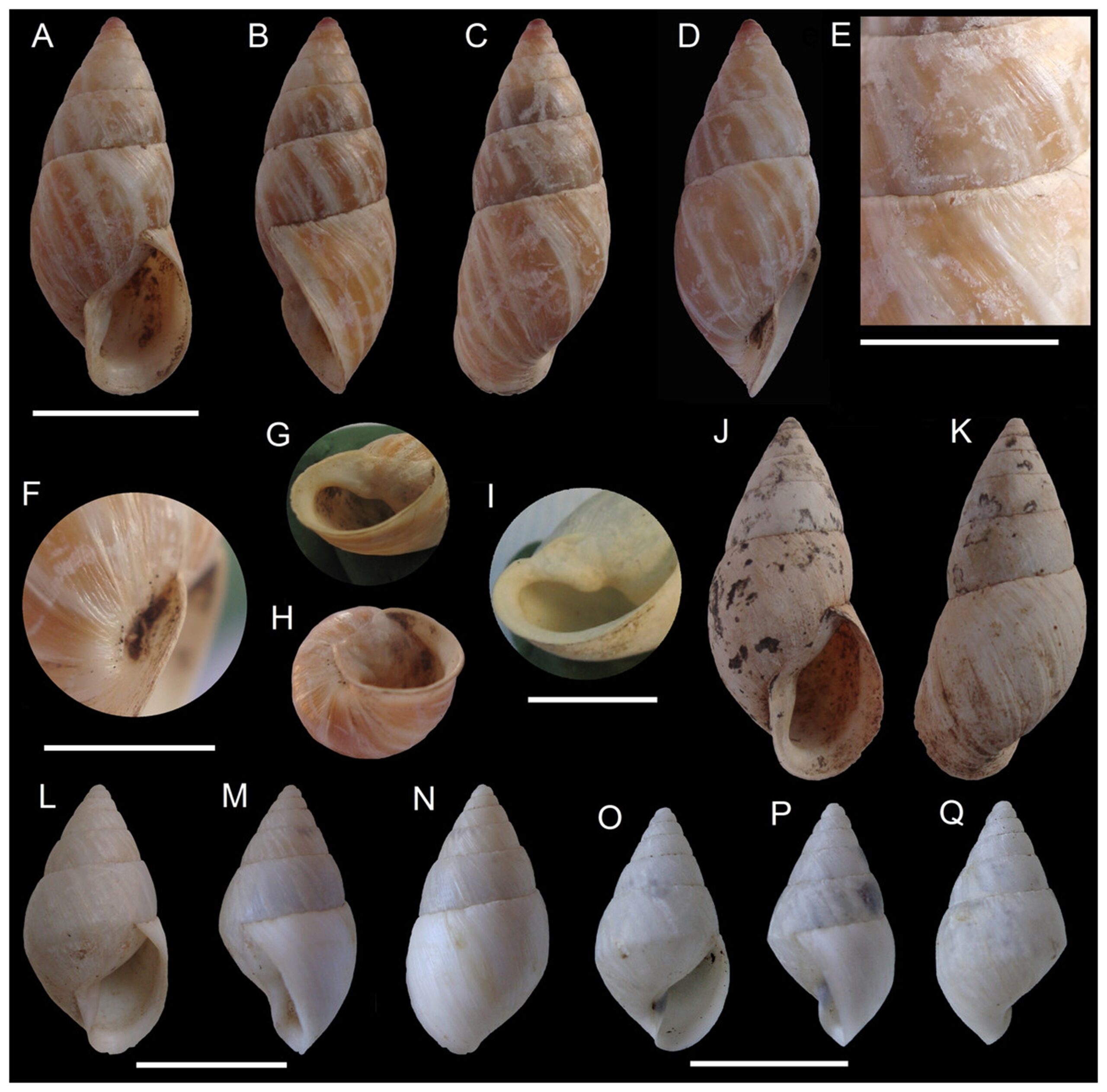
Figura: Araya & Breure, 2017: (A-H) Scutalus chango HOLOTYPE MPCCL 020617; (I) PARATYPE 5 MPCCL 030617D; (J,K) PARATYPE 1 MPCCL 030617A; (L-M) PARATYPE 2 MPCCL 030617B (espécime juvenil); (O-Q) PARATYPE 3 MPCCL 030617C (espécime juvenil)
Fontes:
Descrição original: Araya, J. F. & Breure, A. S. H. (2017). A new terrestrial snail species (Gastropoda: Bulimulidae) from the Región de Antofagasta, northern Chile. PeerJ. 5: e3538., disponível online em http://dx.doi.org/10.7717/peerj.3538
página(s): 4, figs 4A-?Q, 5A-?D
MolluscaBase: https://www.molluscabase.org/aphia.php?p=taxdetails&id=1015456