
Rabdotus baileyi (Dall, 1893)
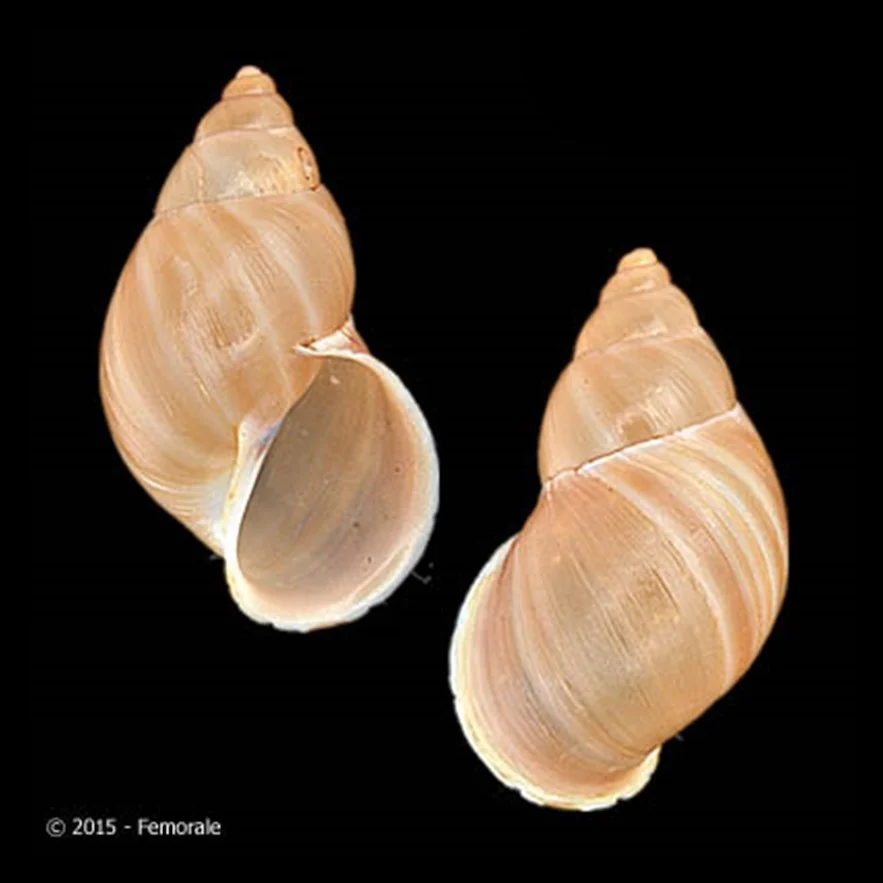
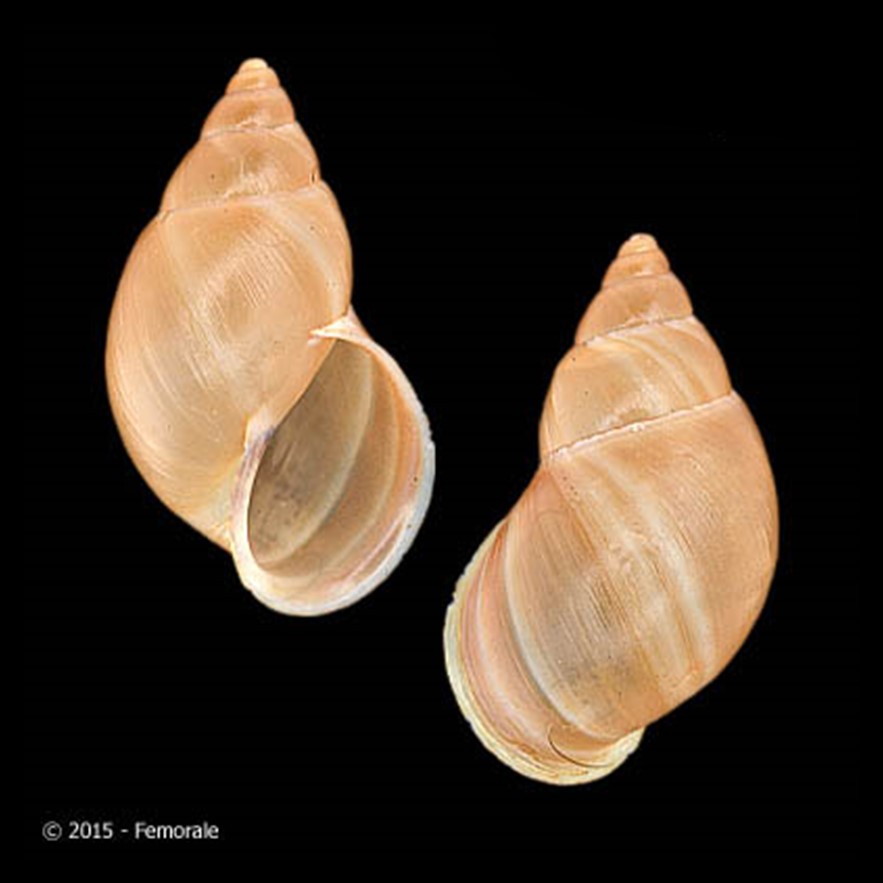
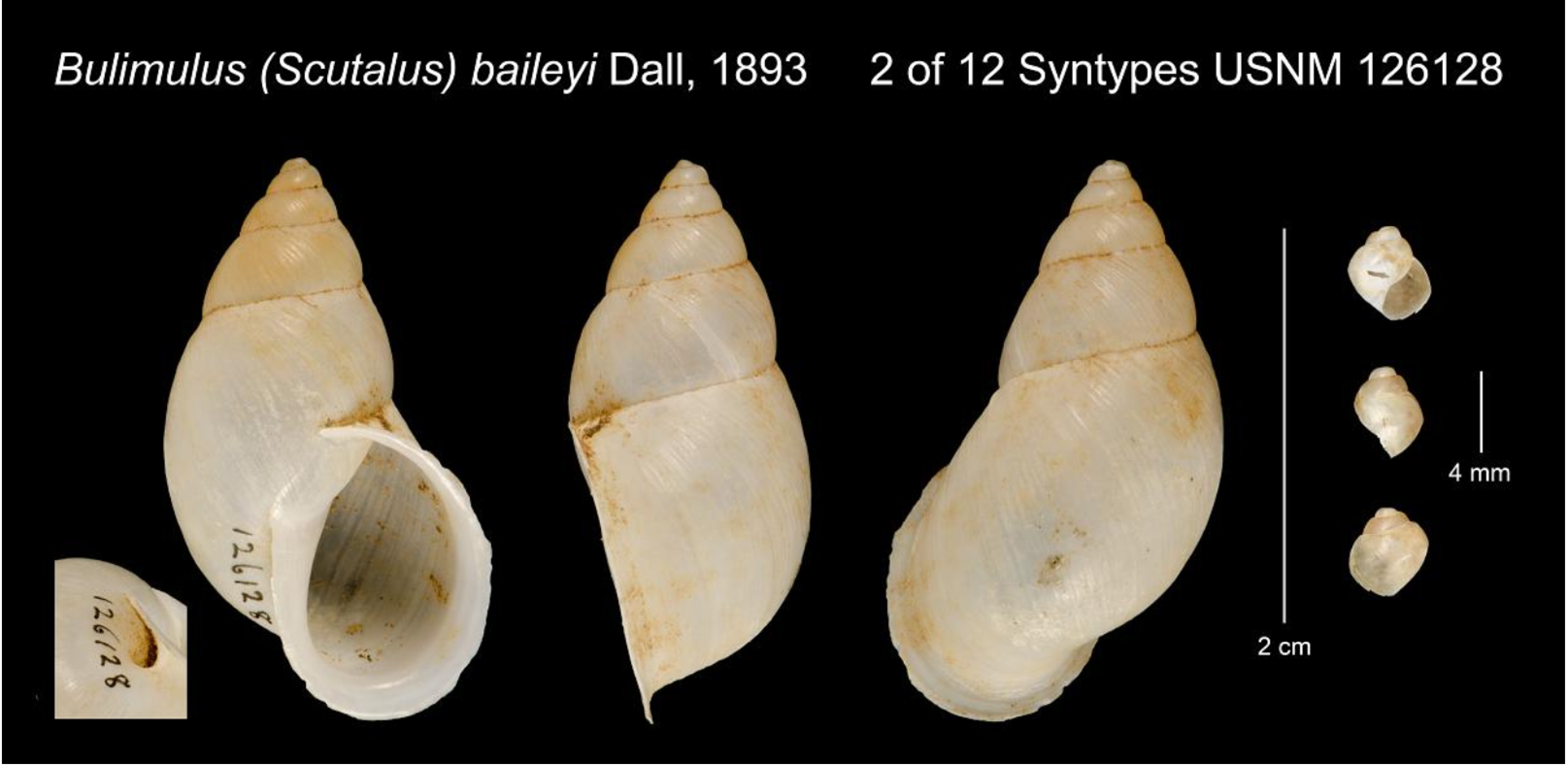
- (1,2) Rabdotus baileyi (Dall, 1893), cortesia Femorale, 2017, Baja California, México, 30.5 e 28.7mm; (3) Smithsonian National Museum of Natural History, SYNTYPE USNM 126128, "Cape St. Lucas, San Jose del Cabo", Baja Califórnia Sul, coletor: Einsen
- Classe
- Gastropoda
- Família
- BULIMULIDAE
- Tamanho
- 28 mm
- Localidade tipo
- México, "Cape St. Lucas, San Jose del Cabo", Baja California Sul
- Nome original
- Bulimulus (Scutalus) baileyi Dall, 1893
Distribuição
Ocorrência: México (Baja California)
Sinônimos
- Rabdotus (Rabdotus) baileyi (Dall, 1893)
Etimologia
o nome da espécie é uma homenagem ao naturalista norte americano, especializado em mamíferos, Vernon Orlando Bailey (1864-1942). Ele foi empregado pelo Bureau of Biological Survey, Departamento de Agricultura dos Estados Unidos. Suas contribuições para o Bureau of Biological Survey totalizaram cerca de 13.000 espécimes, incluindo muitas novas descobertas
Referências
Descrição original
- (Dall, 1893): "Shell when perfectly fresh with a delicate brownish epidermis, which is usually lost, beneath which the shell is brownish flesh color with irregular pale streaks in harmony with the incremental lines; the margin of the whorl in front of the suture is also often whitish; dead shells are Waxen or pure white, often with a ferruginous discoloration; whorls five and a half, the nucleus with a central pit or dimple at the apex, the first two turns regularly ribbed with small, sharp, rather distant ribs, the wider interspaces of which are spirally striate; subsequent whorls with close, fine, sharp, somewhat irregular wrinkles, in harmony with the incremental lines, sparser on the last whorl and crossed by fine sharp close strive of variable strength, sometimes hardly visible, but in other specimens distinct and granulating the wrinkles; all intermediate grades are observable in comparing many specimens; suture distinct; form like that of pallidior on a smaller scale, varying from moderately wide to slender; whorls rounded or moderately flattened; umbilicus small but deeper proportionately than in pallidior; aperture rounded ovate, the lip rather widely reflected, thin, the outer and pillar lips approximating, united by a thin wash of callus."
- (como Bulimulus (Scutalus) baileyi Dall, 1893) Dall, W. H. (1893). Land shells of the genus Bulimulus in Lower California, with descriptions of several new species. Proceedings of the United States National Museum. 16: 639-647, pls. 71-72., disponível online em https://www.biodiversitylibrary.org/page/15781007 — p. 640-641, pl. 71, fig. 1
- Thompson, F. G. (2011). An annotated checklist and bibliography of the land and freshwater snails of México and Central America. Florida Museum of Natural History Bulletin. 50(1): 1-299
Texto original da ficha (para comparação durante os testes)
CLASSE: GASTROPODA: TERRESTRE
FAMÍLIA: BULIMULIDAE
ESPÉCIE: Rabdotus baileyi (Dall, 1893)
Tamanho médio: 28 mm
Ocorrência: México (Baja California)
Localidade tipo: México, “Cape St. Lucas, San Jose del Cabo”, Baja California Sul
Nome original: Bulimulus (Scutalus) baileyi Dall, 1893
Sinônimos: Rabdotus (Rabdotus) baileyi (Dall, 1893)
Etimologia: o nome da espécie é uma homenagem ao naturalista norte americano, especializado em mamíferos, Vernon Orlando Bailey (1864-1942). Ele foi empregado pelo Bureau of Biological Survey, Departamento de Agricultura dos Estados Unidos. Suas contribuições para o Bureau of Biological Survey totalizaram cerca de 13.000 espécimes, incluindo muitas novas descobertas
Descrição original:
(Dall, 1893): “Shell when perfectly fresh with a delicate brownish epidermis, which is usually lost, beneath which the shell is brownish flesh color with irregular pale streaks in harmony with the incremental lines; the margin of the whorl in front of the suture is also often whitish; dead shells are Waxen or pure white, often with a ferruginous discoloration; whorls five and a half, the nucleus with a central pit or dimple at the apex, the first two turns regularly ribbed with small, sharp, rather distant ribs, the wider interspaces of which are spirally striate; subsequent whorls with close, fine, sharp, somewhat irregular wrinkles, in harmony with the incremental lines, sparser on the last whorl and crossed by fine sharp close strive of variable strength, sometimes hardly visible, but in other specimens distinct and granulating the wrinkles; all intermediate grades are observable in comparing many specimens; suture distinct; form like that of pallidior on a smaller scale, varying from moderately wide to slender; whorls rounded or moderately flattened; umbilicus small but deeper proportionately than in pallidior; aperture rounded ovate, the lip rather widely reflected, thin, the outer and pillar lips approximating, united by a thin wash of callus.”
Fotos: (1,2) Rabdotus baileyi (Dall, 1893), cortesia Femorale, 2017, Baja California, México, 30.5 e 28.7mm; (3) Smithsonian National Museum of Natural History, SYNTYPE USNM 126128, “Cape St. Lucas, San Jose del Cabo”, Baja Califórnia Sul, coletor: Einsen
Fontes:
Descrição original: (como Bulimulus (Scutalus) baileyi Dall, 1893) Dall, W. H. (1893). Land shells of the genus Bulimulus in Lower California, with descriptions of several new species. Proceedings of the United States National Museum. 16: 639-647, pls. 71-72., disponível online em https://www.biodiversitylibrary.org/page/15781007
página(s): 640-641, pl. 71, fig. 1
Thompson, F. G. (2011). An annotated checklist and bibliography of the land and freshwater snails of México and Central America. Florida Museum of Natural History Bulletin. 50(1): 1-299
MolluscaBase: https://www.molluscabase.org/aphia.php?p=taxdetails&id=1065168