
Plekocheilus bigener Borrero & Breure, 2011
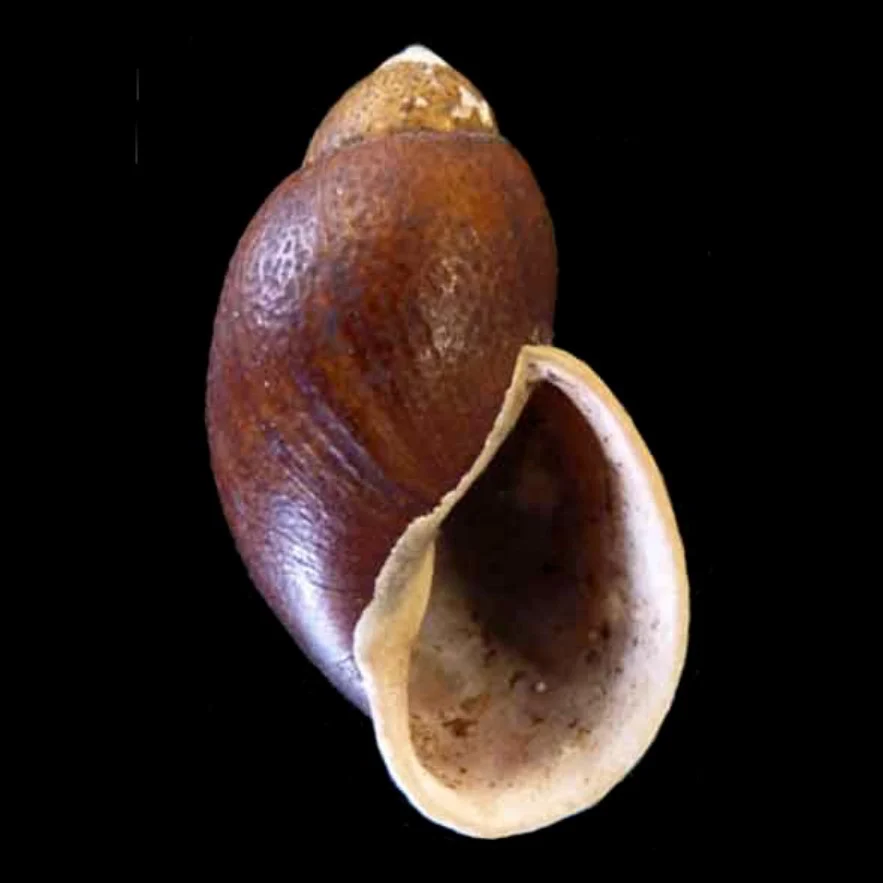
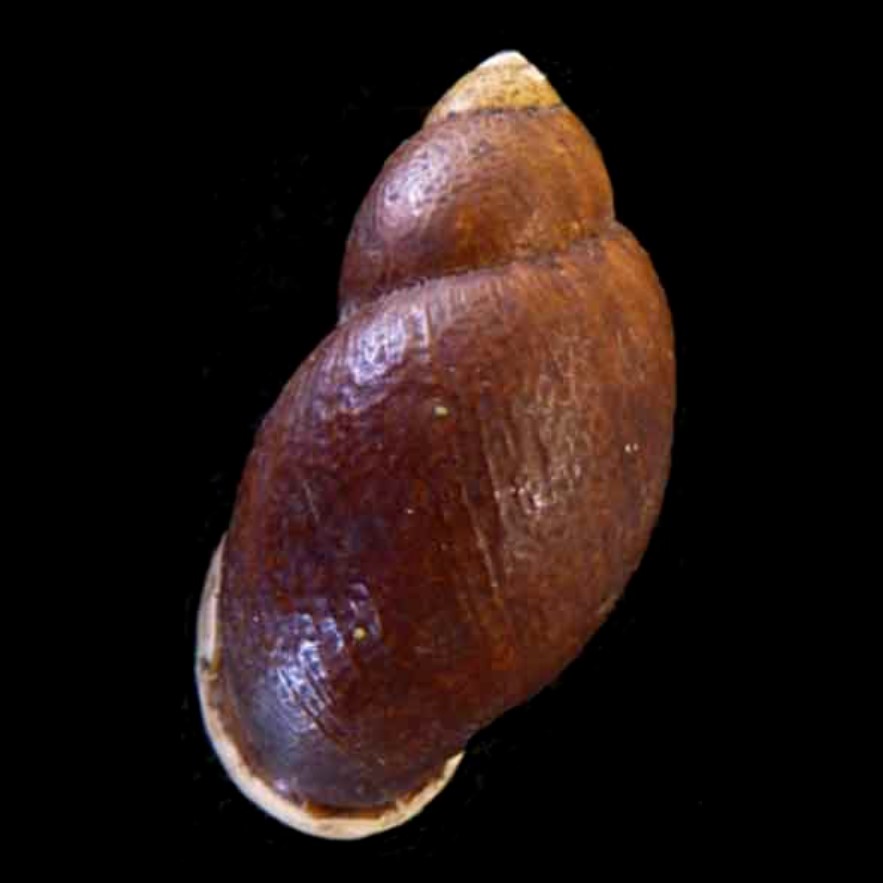
- (1) Borrero & Breure, 2011: HOLOTYPE de Plekocheilus bigener, RMNH 125626, van der Hammen leg., 20.i.1983, 38.5mm
- Classe
- Gastropoda
- Família
- AMPHIBULIMIDAE
- Tamanho
- 29 - 38 mm
- Altitude
- 3600 - 3770 m
- Habitat
- a espécie foi encontrada em “páramos” com Espeletia frontinoensis (Asteraceae) e Chusquea tessellata (Poaceae)
- Localidade tipo
- Colômbia, Risaralda, Parque Nacional Natural Tatamá, Cerro Tatamá
- Nome original
- Plekocheilus (Plekocheilus) bigener Borrero & Breure, 2011
Distribuição
Ocorrência: Colômbia
Etimologia
o nome da espécie deriva da palavra em Latim "bigener", que significa híbrido (hybrid); uma referência à natureza híbrida da escultura da concha, que ocorre nos 2 subgêneros Plekocheilus s. str. e Plekocheilus (Eurytus)
Descrição
(Borreto & Breure, 2012): "Shell up to 38.2 mm, 1.72 times as high as wide, imperforate, ovate, sides of spire slightly convex, moderately solid. Color light to dark chestnut-brown, with irregular, axial streaks of a lighter color; in lighter colored specimens these streaks are almost yellowish. Upper whorls paler, mostly eroded. Surface somewhat shining, with a very fine malleation and a minute granulation; growth striae irregularly thickened as flat riblets for part of their length, with irregular riblets on the upper whorls. Protoconch eroded.
Whorls up to 4.2, slightly convex, the last whorl height 0.87 times the total height, not decidedly swollen; suture impressed, not descending in front. Aperture elongate-ovate, whitish inside, 1.4 times as long as wide, height 0.55 times the shell height. Peristome slightly expanded and reflexed, whitish or pinkish; slightly curved at the insertion to the parietal wall. Columellar margin slightly curved, above with a weak fold entering the aperture; narrowly dilated at the insertion to the parietal wall, which has a thin, whitish callus."
Figuras
Borrero & Breure, 2011: (A–F) Plekocheilus glandiformis (Lea, 1838) , (A–C) HOLOTYPE USNM 105045 (H 33mm); (D–F) HOLOTYPE de Plekocheilus couturesi Ancey, NMW 1955.158.24074 (H 35.7 mm); (G–I) Plekocheilus taquinensis (Pfeiffer, 1855), LECTOTYPE NHMUK 1957.6.3.1 (H 40.2 mm), foto P. Crabb; (J–O) Plekocheilus bigener; (J–L) HOLOTYPE RMNH 125626 (H 38.5 mm); (M–O) PARATYPE RMNH 125627
Referências
Descrição original
- (como Plekocheilus (Plekocheilus) bigener Borrero & Breure, 2011) Borrero, F. J.; Breure, A. S. H. (2011). The Amphibulimidae (Mollusca: Gastropoda: Orthalicoidea) from Colombia and adjacent areas. Zootaxa. 3054, 1-59 — p. 22, fig. 8J-O, 9D
Texto original da ficha (para comparação durante os testes)
CLASSE: GASTROPODA: TERRESTRE
FAMÍLIA: AMPHIBULIMIDAE
ESPÉCIE: Plekocheilus bigener Borrero & Breure, 2011
Tamanho médio: 29 – 38 mm
Ocorrência: Colômbia
Localidade tipo: Colômbia, Risaralda, Parque Nacional Natural Tatamá, Cerro Tatamá
Altitude: 3600 – 3770 m
Habitat: a espécie foi encontrada em “páramos” com Espeletia frontinoensis (Asteraceae) e Chusquea tessellata (Poaceae)
Nome original: Plekocheilus (Plekocheilus) bigener Borrero & Breure, 2011
Etimologia: o nome da espécie deriva da palavra em Latim “bigener”, que significa híbrido (hybrid); uma referência à natureza híbrida da escultura da concha, que ocorre nos 2 subgêneros Plekocheilus s. str. e Plekocheilus (Eurytus)
Descrição:
(Borreto & Breure, 2012): “Shell up to 38.2 mm, 1.72 times as high as wide, imperforate, ovate, sides of spire slightly convex, moderately solid. Color light to dark chestnut-brown, with irregular, axial streaks of a lighter color; in lighter colored specimens these streaks are almost yellowish. Upper whorls paler, mostly eroded. Surface somewhat shining, with a very fine malleation and a minute granulation; growth striae irregularly thickened as flat riblets for part of their length, with irregular riblets on the upper whorls. Protoconch eroded.
Whorls up to 4.2, slightly convex, the last whorl height 0.87 times the total height, not decidedly swollen; suture impressed, not descending in front. Aperture elongate-ovate, whitish inside, 1.4 times as long as wide, height 0.55 times the shell height. Peristome slightly expanded and reflexed, whitish or pinkish; slightly curved at the insertion to the parietal wall. Columellar margin slightly curved, above with a weak fold entering the aperture; narrowly dilated at the insertion to the parietal wall, which has a thin, whitish callus.”
Fotos: (1) Borrero & Breure, 2011: HOLOTYPE de Plekocheilus bigener, RMNH 125626, van der Hammen leg., 20.i.1983, 38.5mm
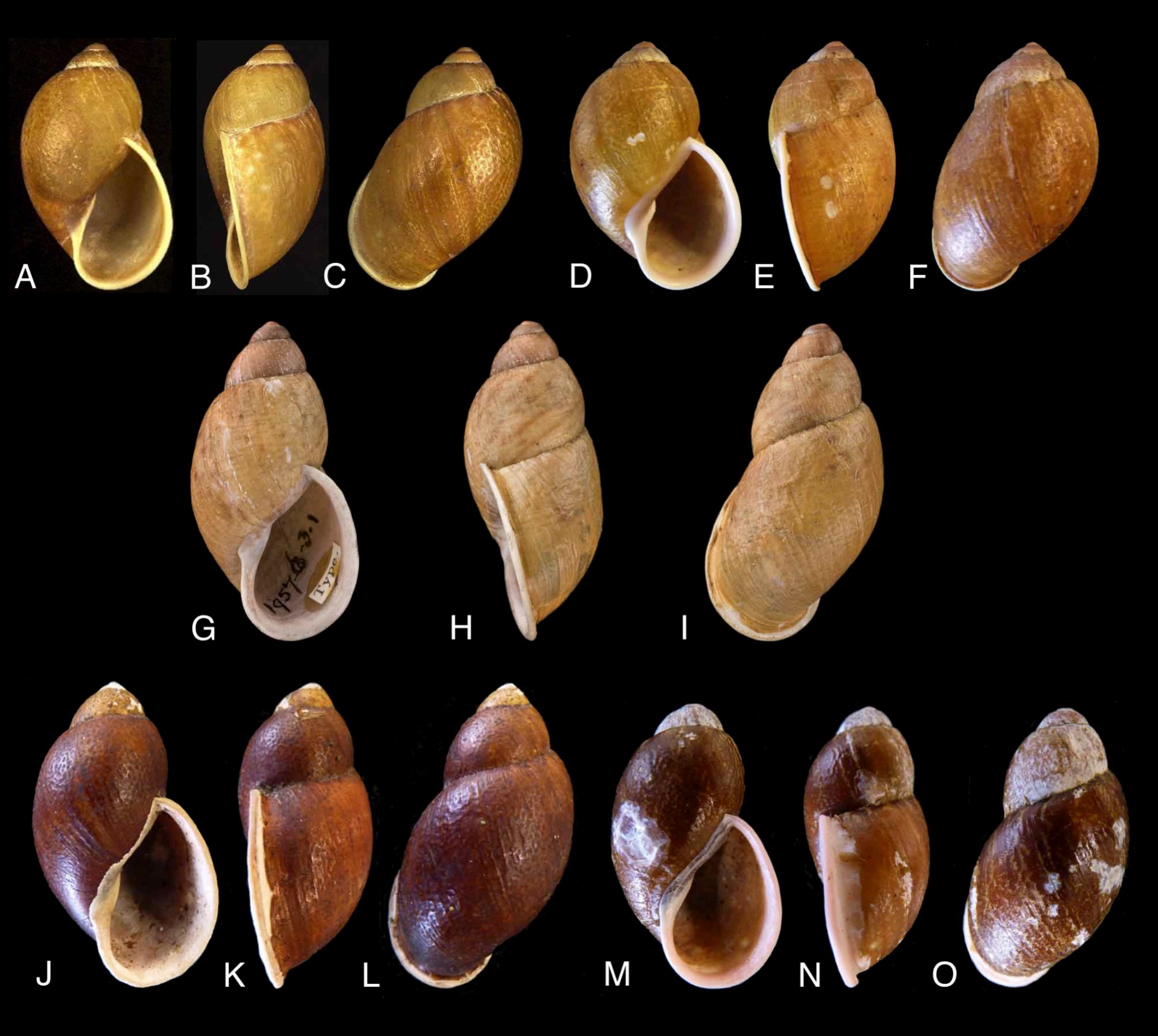
Figura: Borrero & Breure, 2011: (A–F) Plekocheilus glandiformis (Lea, 1838) , (A–C) HOLOTYPE USNM 105045 (H 33mm); (D–F) HOLOTYPE de Plekocheilus couturesi Ancey, NMW 1955.158.24074 (H 35.7 mm); (G–I) Plekocheilus taquinensis (Pfeiffer, 1855), LECTOTYPE NHMUK 1957.6.3.1 (H 40.2 mm), foto P. Crabb; (J–O) Plekocheilus bigener; (J–L) HOLOTYPE RMNH 125626 (H 38.5 mm); (M–O) PARATYPE RMNH 125627
Fontes:
Descrição original: (como Plekocheilus (Plekocheilus) bigener Borrero & Breure, 2011) Borrero, F. J.; Breure, A. S. H. (2011). The Amphibulimidae (Mollusca: Gastropoda: Orthalicoidea) from Colombia and adjacent areas. Zootaxa. 3054, 1-59
página(s): 22, fig. 8J-O, 9D
MolluscaBase: https://www.molluscabase.org/aphia.php?p=taxdetails&id=1060031