
Graptacme perlonga (Dall, 1881)
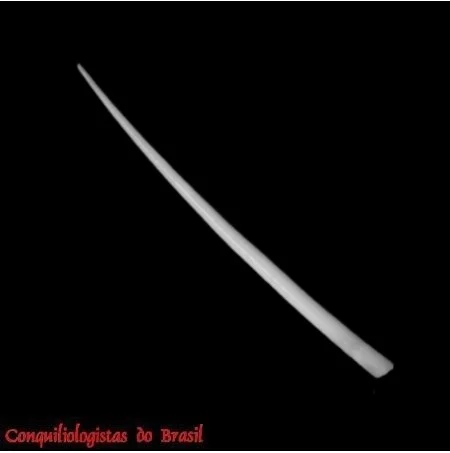
- (1) Caetano, Scarabino & Absalão (2006): Graptacme perlonga, IBUFRJ 13866, 61 mm
- Classe
- Scaphopoda
- Família
- DENTALIIDAE
- Tamanho
- 90 mm
- Profundidade
- 1000 - 1600 m
- Habitat
- Lodo e areia - Vive em fundos lodosos ou arenosos
- Alimentação
- Carnívoro - Alimenta-se de outros animais
- Localidade tipo
- "North of Yucatan Bank, Blake sta 33, 24º01’N, 88º58’W, 2868 m" (designação subsequente por Turner, 1955: 319)
- Nome original
- Dentalium perlongum Dall, 1881
Distribuição
No Brasil: Ceará, Bahia e Rio de Janeiro
Sinônimos
- Fustiaria (Laevidentalium) perlonga (Dall, 1881)
Figuras
Caetano, Scarabino & Absalão (2006): Gênero Graptacme e Fustiaria: (39–43) Graptacme calamus, (39–40) LECTOTYPE USNM 68117, 19 mm, (41–43) IBUFRJ 14232, 18 mm; (44–45) Graptacme perlonga, IBUFRJ 13866, 61 mm; (46–47) Graptacme semistriolata, IBUFRJ 14247, 35 mm; (48–52) Fustiaria liodon, (48) HOLOTYPE ANSP 35554, 25 mm, (49–52) IBUFRJ 14252, 30 mm; (53–56) Fustiaria stenoschiza, (53–54) SYNTYPE ANSP 71081, 35 mm, (55–56), IBUFRJ 10587, 26 mm
Referências
Descrição original
- (como Dentalium perlongum Dall, 1881) Dall, W. H. (1881). Reports on the results of dredging, under the supervision of Alexander Agassiz, in the Gulf of Mexico and in the Caribbean Sea (1877-78), by the United States Coast Survey Steamer "Blake", Lieutenant-Commander C.D. Sigsbee, U.S.N., and Commander J.R. Bartlett, U.S.N., commanding. XV. Preliminary report on the Mollusca. Bulletin of the Museum of Comparative Zoology at Harvard College. 9(2): 33-144., disponível online em http://biodiversitylibrary.org/page/6353276 — p. 36-37
- Caetano C. H., Scarabino V. & Absalao R. S. (2006). Scaphopoda (Mollusca) from the Brazilian continental shelf and upper slope (13° to 21°S) with descriptions of two new species of the genus Cadulus Philippi, 1844. Zootaxa. 1267: 1-47., disponível online em https://doi.org/10.11646/zootaxa.1267.1.1
- Scarabino, F. 2003. Lista sistemática de los Aplacophora, Polyplacophora y Scaphopoda de Uruguay. Comunicaciones de la Sociedad Malacólogica del Uruguay, 8 (78-79): 191-196
- Kraeuter, J. N. 2009. Scaphopoda (Mollusca) of the Gulf of Mexico, Pp. 745–749 in Felder, D.L. and D.K. Camp (eds.), Gulf of Mexico–Origins, Waters, and Biota. Biodiversity. Texas A&M Press, College Station, Texas
- Souza, Leonardo & Araújo, Isabella & Caetano, Carlos. (2013). A commented list of Scaphopoda (Mollusca) found along the Brazilian coast, with two new synonymies in the genus Gadila Gray, 1847. Biota Neotropica. 13. 228-235
Texto original da ficha (para comparação durante os testes)
CLASSE: SCAPHOPODA : MARINHO
FAMÍLIA: DENTALIIDAE
ESPÉCIE: Graptacme perlonga (Dall, 1881)
Tamanho médio: 90 mm
Profundidade: 1000 – 1600 m
Habitat: Lodo e areia – Vive em fundos lodosos ou arenosos
Alimentação: Carnívoro – Alimenta-se de outros animais
Ocorrência no Brasil: Ceará, Bahia e Rio de Janeiro
Localidade tipo: “North of Yucatan Bank, Blake sta 33, 24º01’N, 88º58’W, 2868 m” (designação subsequente por Turner, 1955: 319)
Nome original: Dentalium perlongum Dall, 1881
Sinônimos: Fustiaria (Laevidentalium) perlonga (Dall, 1881)
Fotos: (1) Caetano, Scarabino & Absalão (2006): Graptacme perlonga, IBUFRJ 13866, 61 mm
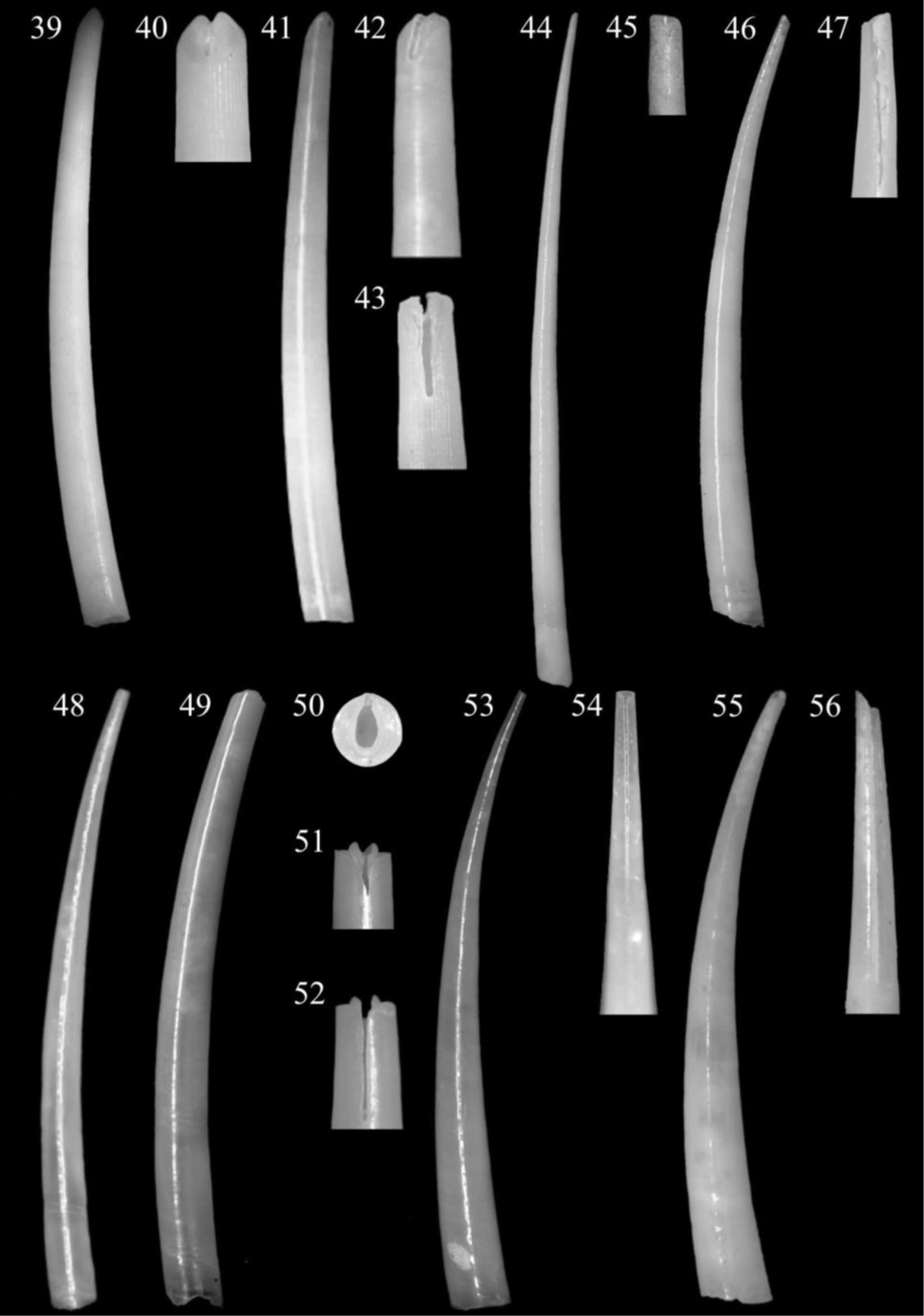
Figura: Caetano, Scarabino & Absalão (2006): Gênero Graptacme e Fustiaria: (39–43) Graptacme calamus, (39–40) LECTOTYPE USNM 68117, 19 mm, (41–43) IBUFRJ 14232, 18 mm; (44–45) Graptacme perlonga, IBUFRJ 13866, 61 mm; (46–47) Graptacme semistriolata, IBUFRJ 14247, 35 mm; (48–52) Fustiaria liodon, (48) HOLOTYPE ANSP 35554, 25 mm, (49–52) IBUFRJ 14252, 30 mm; (53–56) Fustiaria stenoschiza, (53–54) SYNTYPE ANSP 71081, 35 mm, (55–56), IBUFRJ 10587, 26 mm
Fontes:
Descrição original: (como Dentalium perlongum Dall, 1881) Dall, W. H. (1881). Reports on the results of dredging, under the supervision of Alexander Agassiz, in the Gulf of Mexico and in the Caribbean Sea (1877-78), by the United States Coast Survey Steamer “Blake”, Lieutenant-Commander C.D. Sigsbee, U.S.N., and Commander J.R. Bartlett, U.S.N., commanding. XV. Preliminary report on the Mollusca. Bulletin of the Museum of Comparative Zoology at Harvard College. 9(2): 33-144., disponível online em http://biodiversitylibrary.org/page/6353276
página(s): 36-37
Caetano C. H., Scarabino V. & Absalao R. S. (2006). Scaphopoda (Mollusca) from the Brazilian continental shelf and upper slope (13° to 21°S) with descriptions of two new species of the genus Cadulus Philippi, 1844. Zootaxa. 1267: 1-47., disponível online em https://doi.org/10.11646/zootaxa.1267.1.1
Scarabino, F. 2003. Lista sistemática de los Aplacophora, Polyplacophora y Scaphopoda de Uruguay. Comunicaciones de la Sociedad Malacólogica del Uruguay, 8 (78-79): 191-196
Kraeuter, J. N. 2009. Scaphopoda (Mollusca) of the Gulf of Mexico, Pp. 745–749 in Felder, D.L. and D.K. Camp (eds.), Gulf of Mexico–Origins, Waters, and Biota. Biodiversity. Texas A&M Press, College Station, Texas
Souza, Leonardo & Araújo, Isabella & Caetano, Carlos. (2013). A commented list of Scaphopoda (Mollusca) found along the Brazilian coast, with two new synonymies in the genus Gadila Gray, 1847. Biota Neotropica. 13. 228-235
Molluscabase: https://molluscabase.org/aphia.php?p=taxdetails&id=344515