
Bostryx binghami (Dall, 1910)
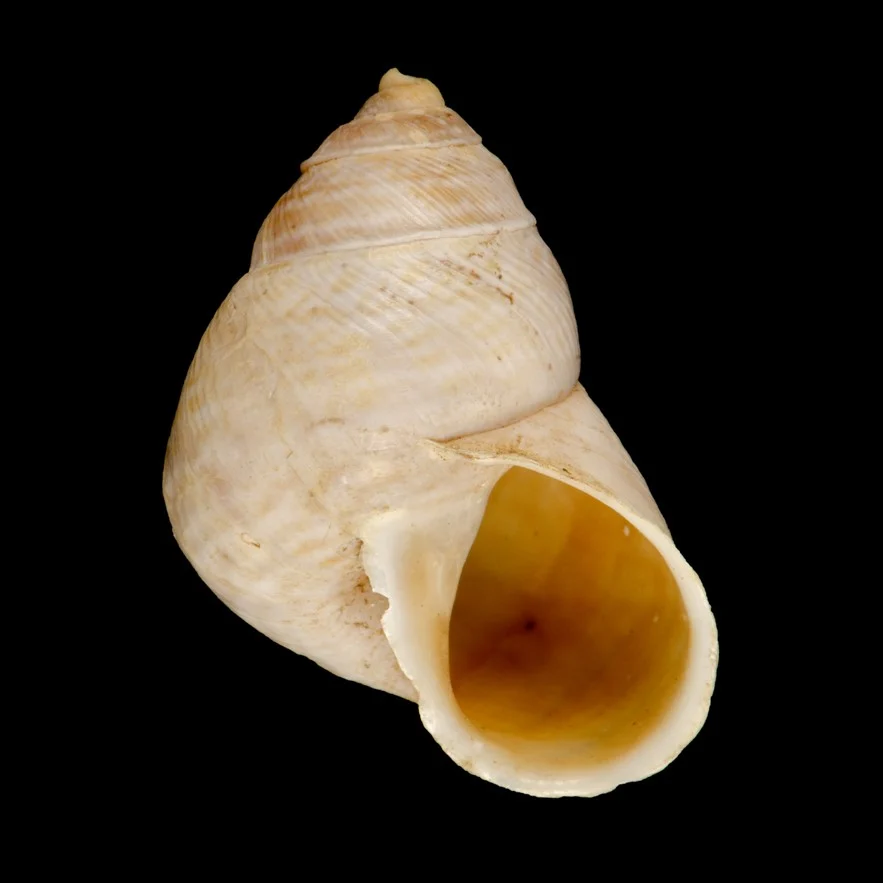
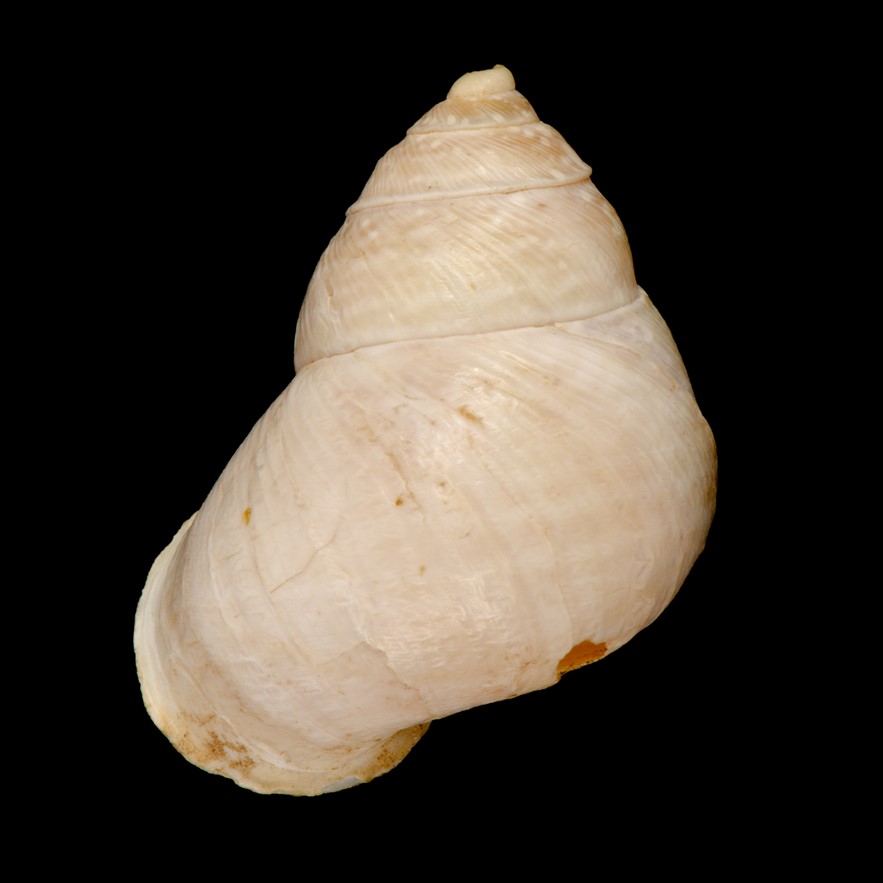
- (1-3) Smithsonian National Museum of Natural History: HOLOTYPE de Bostryx binghami, USNM 209270, Peru, "collected from cacti on the banks of the Rio Pampas", coll. Dr Hiram Bingham
- Classe
- Gastropoda
- Família
- BULIMULIDAE
- Tamanho
- 36 mm
- Localidade tipo
- Peru, "banks fo Rio Pampas"
- Nome original
- Bulimulus (Lissoacme) binghami Dall, 1910
Distribuição
Ocorrência: Peru
Etimologia
o nome da espécie Bostryx binghami (Dall, 1910) é uma homenagem ao norte americano Hiram Bingham (1875 - 1956). Bingham foi acadêmico, explorador e político e ficou conhecido mundialmente pela redescoberta da cidadela Inca de Machu Picchu
Referências
Descrição original
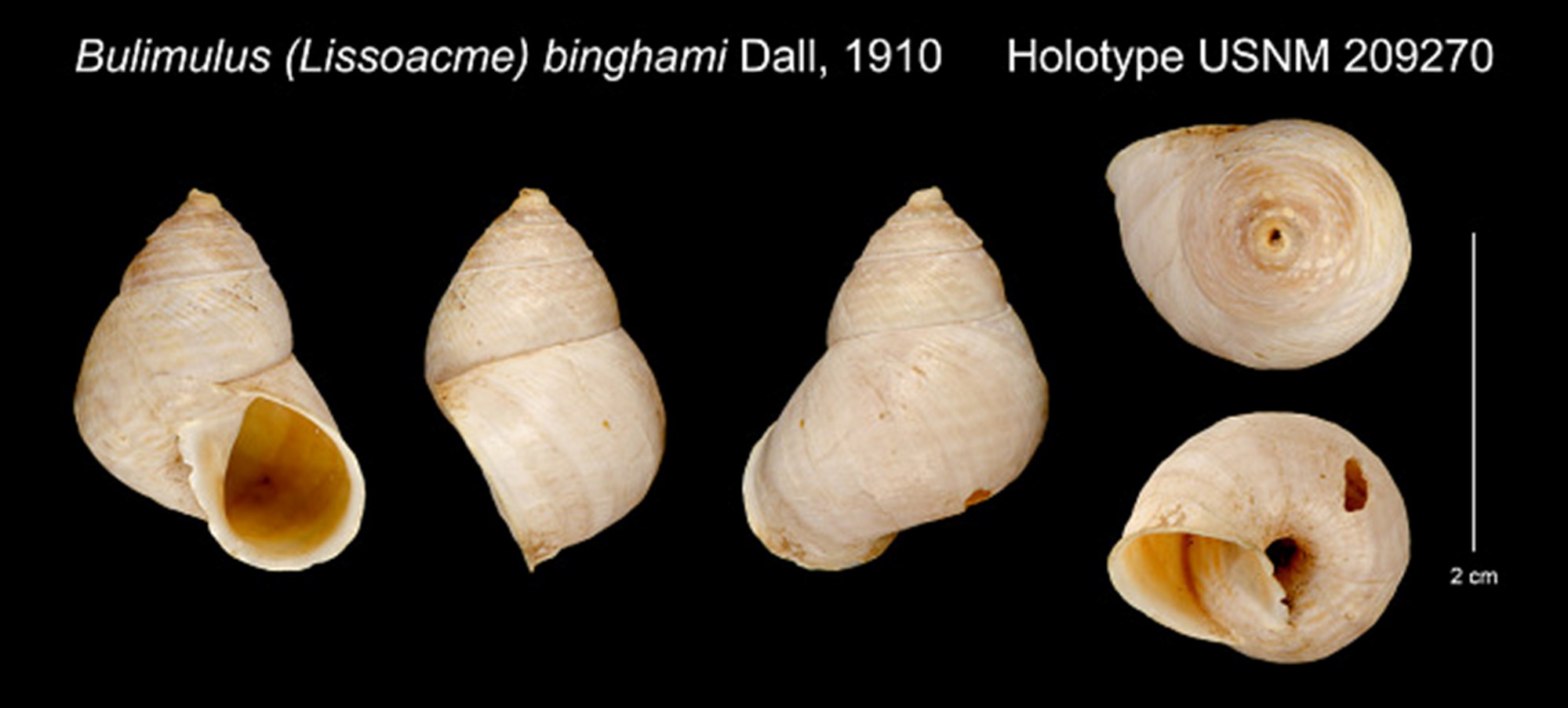
- (Dall, 1910): "Shell stout, wide, conic, with a smooth nucleus of about two whorls and four subsequent whorls; for somewhat over two whorls the young shell has a prominent keel against which the suture is closely apprcssed, so that the presence of tin 1 keel requires close examination to recognize; a little beyond the end of the second whorl the keel disappears below the suture, and only very obscure traces of it remain on the last whorl;
- The spire as a whole is convexly conic, the separate whorls project but little; the last whorl rapidly enlarges with a rounded periphery, evenly rounded into a wide subcylindric umbilicus; sculpture of well marked retractively arcuate wrinkles, with subequal interspaces obsoletely spirally striate;
- The sculpture is most obvious on the spire and on the part of the last whorl behind the periphery: toward the aperture the whorl descends a little below the periphery; the well-reflected outer lip bends markedly toward the posterior end of the pillar lip, and the two are joined by a thin glaze over the body; the pillar lip is very broad and thin. half obscuring the umbilicus; the pillar is straight without any twist or fold; the color of the shell is yellowish white, with more or less distinct pale brownish spiral lines or narrow bands; the lip is whitish, the interior of the aperture pale yellowish-brown; the nucleus is slightly mammillary.
- Height of shell, 36 ; of last whorl. 10: of aperture (vertical), 13; maximum diameter of shell, 20; of aperture, 11: of umbilicus, 2.5 mm."
- (como Bulimulus (Lissoacme) binghami Dall, 1910) Dall, W. H. (1910). On some landshells collected by Dr. H. Bingham in Peru. Proceedings of the United States National Museum. 38 (1736): 177-182., disponível online em https://www.biodiversitylibrary.org/page/7615817 — p. 180, fig. 2
- Orrell T, Informatics and Data Science Center - Digital Stewardship (2026). NMNH Extant Specimen Records (USNM, US). Version 1.105. National Museum of Natural History, Smithsonian Institution. Occurrence dataset https://doi.org/10.15468/hnhrg3 accessed via GBIF.org on 2026-02-26. https://www.gbif.org/occurrence/1318397845
Texto original da ficha (para comparação durante os testes)
CLASSE: GASTROPODA: TERRESTRE
FAMÍLIA: BULIMULIDAE
ESPÉCIE: Bostryx binghami (Dall, 1910)
Tamanho médio: 36 mm
Ocorrência: Peru
Localidade tipo: Peru, “banks fo Rio Pampas”
Nome original: Bulimulus (Lissoacme) binghami Dall, 1910
Etimologia: o nome da espécie Bostryx binghami (Dall, 1910) é uma homenagem ao norte americano Hiram Bingham (1875 – 1956). Bingham foi acadêmico, explorador e político e ficou conhecido mundialmente pela redescoberta da cidadela Inca de Machu Picchu
Descrição original:
(Dall, 1910): “Shell stout, wide, conic, with a smooth nucleus of about two whorls and four subsequent whorls; for somewhat over two whorls the young shell has a prominent keel against which the suture is closely apprcssed, so that the presence of tin 1 keel requires close examination to recognize; a little beyond the end of the second whorl the keel disappears below the suture, and only very obscure traces of it remain on the last whorl;
The spire as a whole is convexly conic, the separate whorls project but little; the last whorl rapidly enlarges with a rounded periphery, evenly rounded into a wide subcylindric umbilicus; sculpture of well marked retractively arcuate wrinkles, with subequal interspaces obsoletely spirally striate;
The sculpture is most obvious on the spire and on the part of the last whorl behind the periphery: toward the aperture the whorl descends a little below the periphery; the well-reflected outer lip bends markedly toward the posterior end of the pillar lip, and the two are joined by a thin glaze over the body; the pillar lip is very broad and thin. half obscuring the umbilicus; the pillar is straight without any twist or fold; the color of the shell is yellowish white, with more or less distinct pale brownish spiral lines or narrow bands; the lip is whitish, the interior of the aperture pale yellowish-brown; the nucleus is slightly mammillary.
Height of shell, 36 ; of last whorl. 10: of aperture (vertical), 13; maximum diameter of shell, 20; of aperture, 11: of umbilicus, 2.5 mm.”
Fotos: (1-3) Smithsonian National Museum of Natural History: HOLOTYPE de Bostryx binghami, USNM 209270, Peru, “collected from cacti on the banks of the Rio Pampas”, coll. Dr Hiram Bingham
Fontes:
Descrição original: (como Bulimulus (Lissoacme) binghami Dall, 1910) Dall, W. H. (1910). On some landshells collected by Dr. H. Bingham in Peru. Proceedings of the United States National Museum. 38 (1736): 177-182., disponível online em https://www.biodiversitylibrary.org/page/7615817
página(s): 180, fig. 2
Orrell T, Informatics and Data Science Center – Digital Stewardship (2026). NMNH Extant Specimen Records (USNM, US). Version 1.105. National Museum of Natural History, Smithsonian Institution. Occurrence dataset https://doi.org/10.15468/hnhrg3 accessed via GBIF.org on 2026-02-26. https://www.gbif.org/occurrence/1318397845
MolluscaBase: https://www.molluscabase.org/aphia.php?p=taxdetails&id=1321593