
Anostoma luetzelburgi A. Weber, 1925
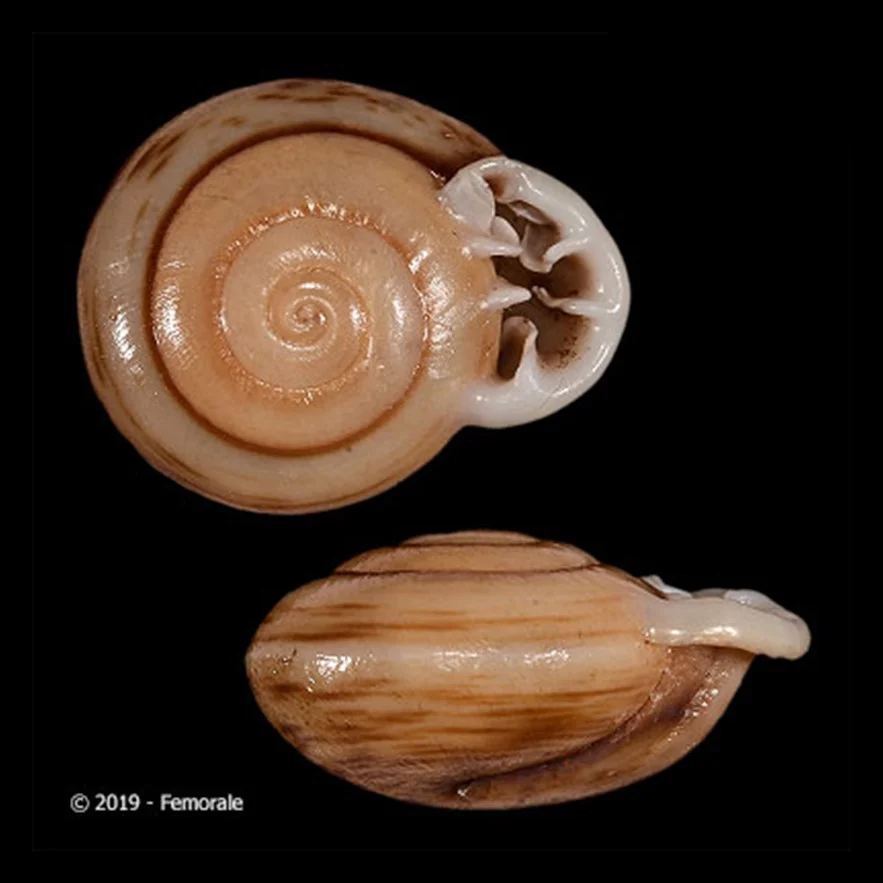
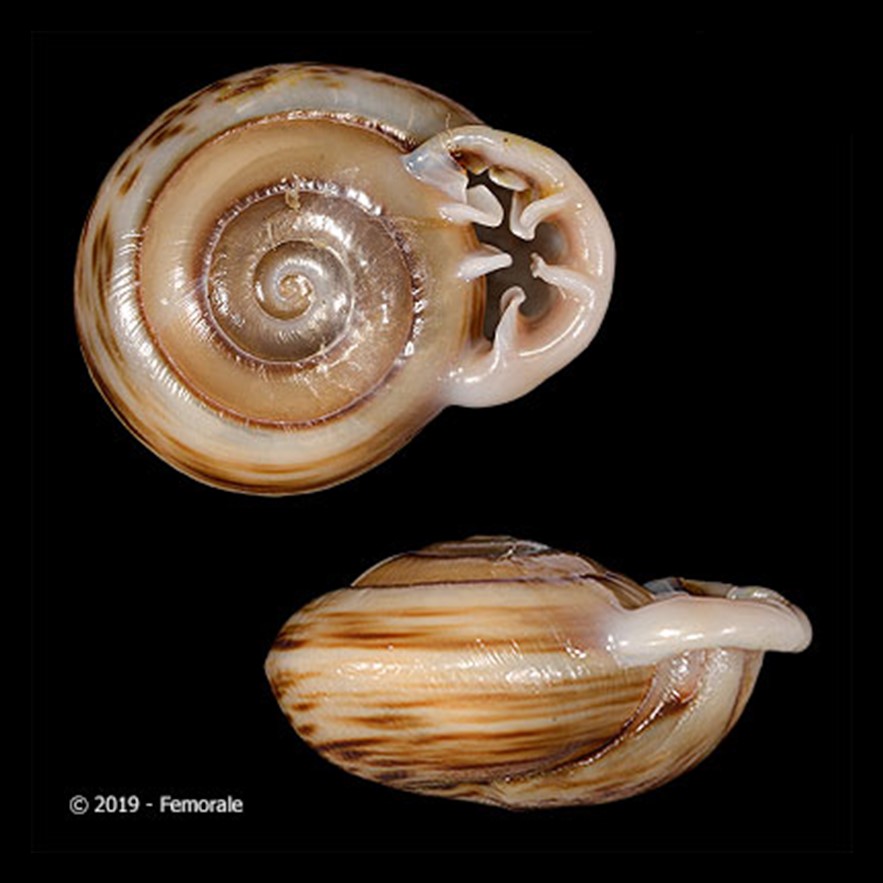
- (1) cortesia Femorale, 2019. Goiás, 18mm; (2) Breure, 1985: figura abertura da concha
Sinônimos
- Ringincella luetzelburgi (A. Weber, 1925)
- Anostoma lutzelburgi A. Weber, 1925 [sic]
- Cavallari, Daniel & Rosa, Rafael & De Luca, Andre & Santos, Fernanda & Ribeiro, Felipe & Salvador, Rodrigo. (2024). Taxonomic synopsis of land snails (Mollusca: Gastropoda) from the Brazilian Midwest deposited in the Coleção Malacológica de Ribeirão Preto, University of São Paulo, Brazil. Journal of Conchology. 45. página(s) 368-381
- Breure, Bram & Schouten, J.. (1985). Notes on and descriptions of Bulimulidae (Mollusca, Gastropoda), III. Zoologische Verhandelingen. 216
Etimologia
o nome da espécie é uma homenagem a Philipp von Luetzelburg (1880 — 1948). Foi um engenheiro, botânico, fitogeógrafo e explorador alemão que realizou extensas explorações botânicas no Nordeste do Brasil contratado pela Inspetoria Federal de Obras contra as Secas
Descrição
(Breure, 1985): "Shell up to 16.0 mm high, 0.52 times as long as wide, biconvex, hardly rimate; rather thin. Colour light brown to whitish, the last whorl with dark brown spots and more or less spiral streaks. A continuous dark brown band is present below the suture and on the periphery; the sutural band continues on the upper whorls. The surface is shining; the growth striae on the upper whorls tend to form puckered bands; the penultimate and the last whorl with fine spiral striae and striolation in between. Whorls 4.4, rather convex, the last whorl slightly acute at the periphery; suture hardly to well impressed. Aperture subhorizontal, semicircular.
Peristome strongly expanded and reflexed, rather thick; parietal callus whitish, spreading over the preceding whorls. Parietal region with three lamellae: a small angularis and subequal parietalis and infraparietalis, of which the last mentioned is less curved. Outer lip with two straight and three curved lamellae: subequal columellaris and palatalis inferior that are both slightly curved; a large S-shaped palatalis superior; a small horizontal suprapalatalis and a small suturalis. The angularis and suturalis form a narrow fissure in the peristome."
Comentários
(a) Cavallari et al. 2024 considera esta espécie como sinônimo de Anostoma rossi Weber, 1925, porém mantidas as duas espécies para a comparação;
(b) Segundo Breure, 1985, o material tipo está preservado no Munchen Museum, e foi estudado e designado como LECTOTYPE: altura da concha 15.5 mm, diâmetro máximo 30.5 mm, diâmetro mínimo 24.0 mm
Figuras
Cavallari et al. 2024: (A) Anostoma rossi Weber, 1925: Goiás, São Domingos, "between caves Terra Ronca 1 and Terra Ronca", iv.2022, CMRP 1006; (B) Anostoma rossi, LECTOTYPE ZSM 20020169; (C) Anostoma luetzelburgi Weber, 1925, PARALECTOTYPE ZSM 20020163
Referências
Descrição original
- Weber, A. (1925). Konchyliologische Ergebnisse einer Forschungsreise Dr. v. Lützelburg's in Brasilien. Zoologische Jahrbücher Abteilung für Systematik, Geographie und Biologie der Tiere. 50: 273-283, pl. 5, figs. 1-6
- Simone, L. R. L. (2006). Land and Freshwater Molluscs of Brazil. Editora Gráfica Bernardi, FAPESP. São Paulo, 390 pp. página(s): 175
Texto original da ficha (para comparação durante os testes)
CLASSE: GASTROPODA: TERRESTRE
FAMÍLIA: TOMOGERIDAE
ESPÉCIE: Anostoma luetzelburgi A. Weber, 1925
Tamanho médio: 30 mm
Distribuição: Brasil (Bahia, Goiás)
Localidade tipo: Brasil, Goiás (Serra Geral) e Bahia (São Desidério) (Breure, 1985)
Habitat: vive no solo, sob folhas ou enterrada parte do tempo
Nome original: Anostoma luetzelburgi A. Weber, 1925
Sinônimos: Ringincella luetzelburgi (A. Weber, 1925); Anostoma lutzelburgi A. Weber, 1925 [sic]
Comentários:
(a) Cavallari et al. 2024 considera esta espécie como sinônimo de Anostoma rossi Weber, 1925, porém mantidas as duas espécies para a comparação;
(b) Segundo Breure, 1985, o material tipo está preservado no Munchen Museum, e foi estudado e designado como LECTOTYPE: altura da concha 15.5 mm, diâmetro máximo 30.5 mm, diâmetro mínimo 24.0 mm
Etimologia: o nome da espécie é uma homenagem a Philipp von Luetzelburg (1880 — 1948). Foi um engenheiro, botânico, fitogeógrafo e explorador alemão que realizou extensas explorações botânicas no Nordeste do Brasil contratado pela Inspetoria Federal de Obras contra as Secas
Redescrição:
(Breure, 1985): “Shell up to 16.0 mm high, 0.52 times as long as wide, biconvex, hardly rimate; rather thin. Colour light brown to whitish, the last whorl with dark brown spots and more or less spiral streaks. A continuous dark brown band is present below the suture and on the periphery; the sutural band continues on the upper whorls. The surface is shining; the growth striae on the upper whorls tend to form puckered bands; the penultimate and the last whorl with fine spiral striae and striolation in between. Whorls 4.4, rather convex, the last whorl slightly acute at the periphery; suture hardly to well impressed. Aperture subhorizontal, semicircular.
Peristome strongly expanded and reflexed, rather thick; parietal callus whitish, spreading over the preceding whorls. Parietal region with three lamellae: a small angularis and subequal parietalis and infraparietalis, of which the last mentioned is less curved. Outer lip with two straight and three curved lamellae: subequal columellaris and palatalis inferior that are both slightly curved; a large S-shaped palatalis superior; a small horizontal suprapalatalis and a small suturalis. The angularis and suturalis form a narrow fissure in the peristome.”
Fotos: (1) cortesia Femorale, 2019. Goiás, 18mm; (2) Breure, 1985: figura abertura da concha
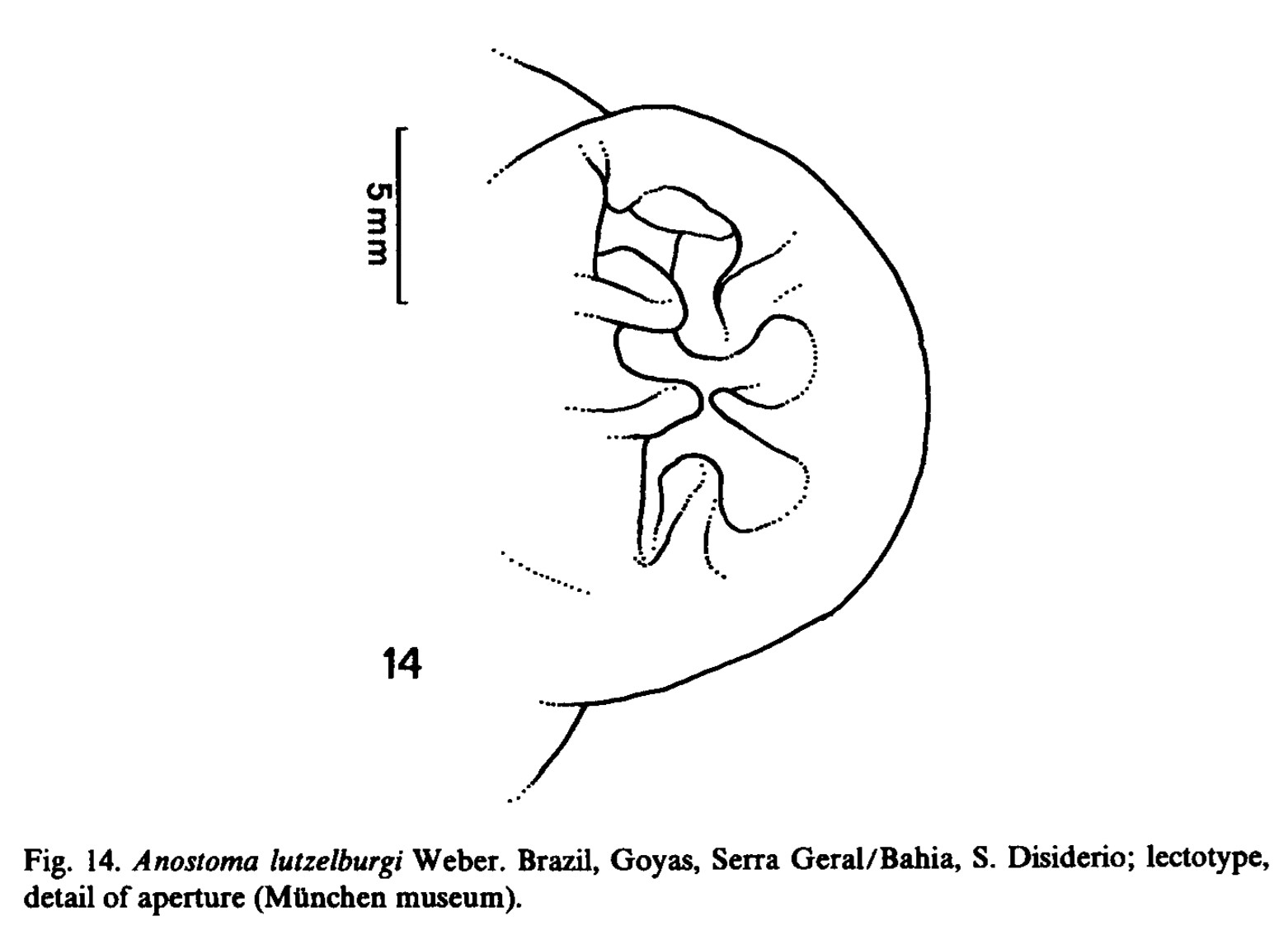
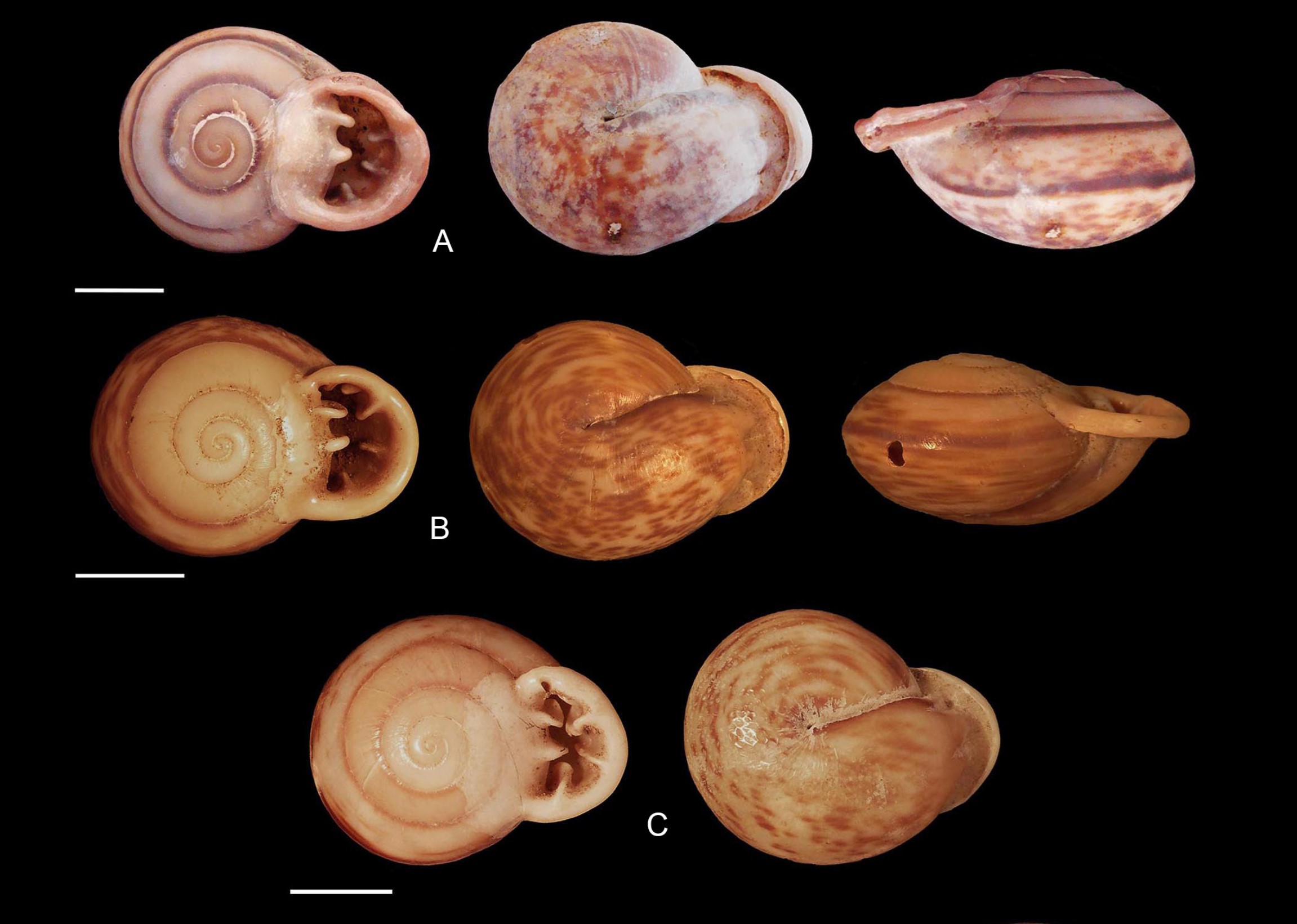
Figura: Cavallari et al. 2024: (A) Anostoma rossi Weber, 1925: Goiás, São Domingos, “between caves Terra Ronca 1 and Terra Ronca”, iv.2022, CMRP 1006; (B) Anostoma rossi, LECTOTYPE ZSM 20020169; (C) Anostoma luetzelburgi Weber, 1925, PARALECTOTYPE ZSM 20020163
Fontes:
Descrição original: Weber, A. (1925). Konchyliologische Ergebnisse einer Forschungsreise Dr. v. Lützelburg’s in Brasilien. Zoologische Jahrbücher Abteilung für Systematik, Geographie und Biologie der Tiere. 50: 273-283, pl. 5, figs. 1-6
Simone, L. R. L. (2006). Land and Freshwater Molluscs of Brazil. Editora Gráfica Bernardi, FAPESP. São Paulo, 390 pp. página(s): 175
fonte do sinônimo: Cavallari, Daniel & Rosa, Rafael & De Luca, Andre & Santos, Fernanda & Ribeiro, Felipe & Salvador, Rodrigo. (2024). Taxonomic synopsis of land snails (Mollusca: Gastropoda) from the Brazilian Midwest deposited in the Coleção Malacológica de Ribeirão Preto, University of São Paulo, Brazil. Journal of Conchology. 45. página(s) 368-381
Breure, Bram & Schouten, J.. (1985). Notes on and descriptions of Bulimulidae (Mollusca, Gastropoda), III. Zoologische Verhandelingen. 216
Molluscabase: https://www.molluscabase.org/aphia.php?p=taxdetails&id=1448136