
Anostoma brunneum Verdcourt, 1992
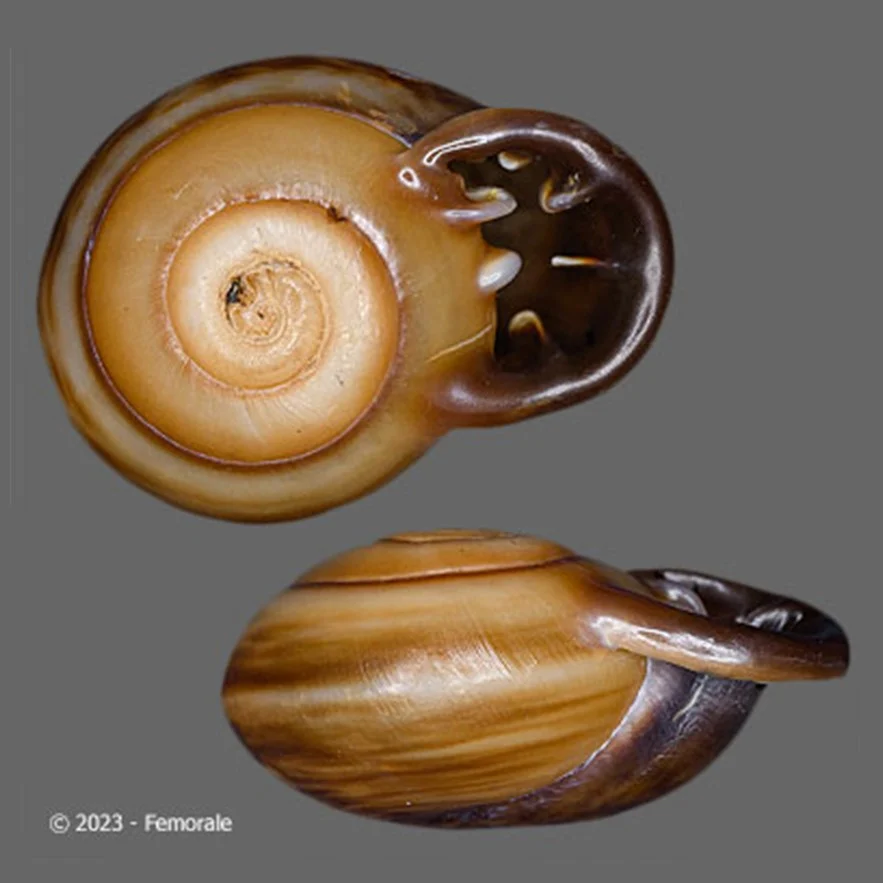
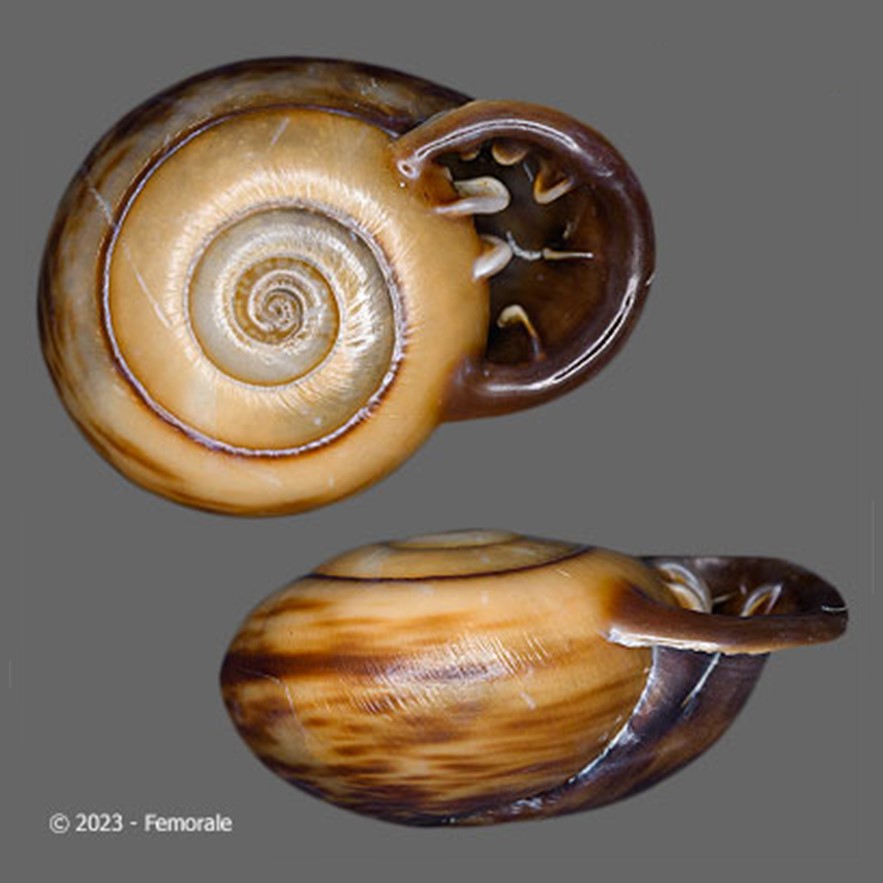
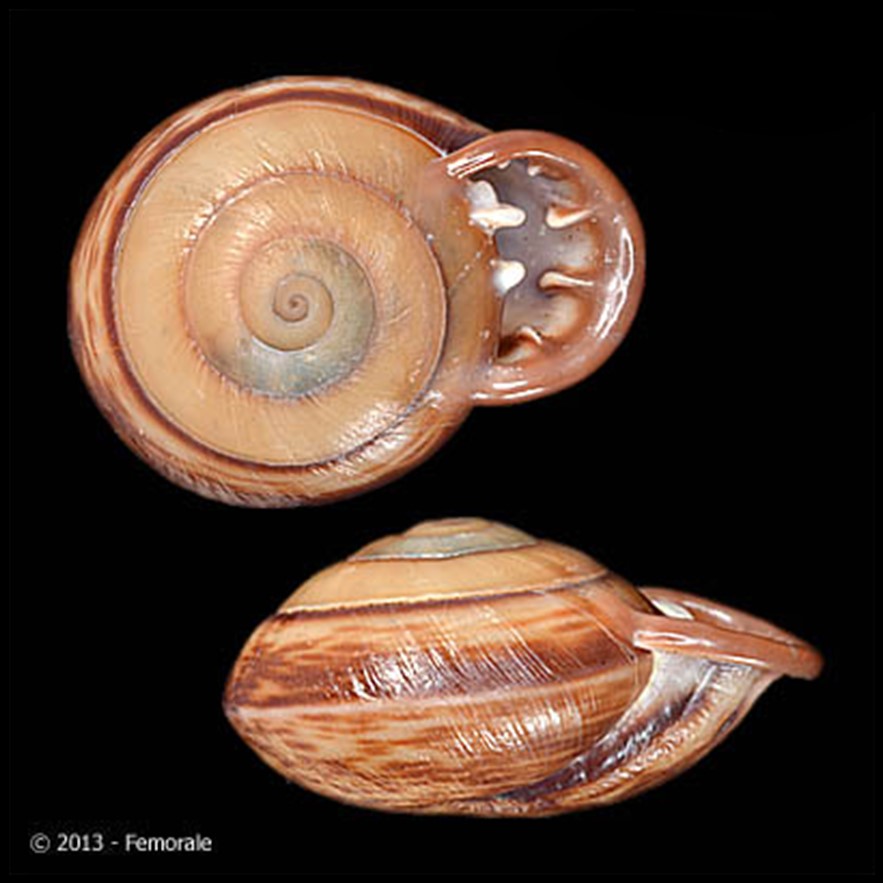
- (1-3) cortesia Femorale, 2023, Goiás, ~29 mm
- Classe
- Gastropoda
- Família
- TOMOGERIDAE
- Tamanho
- 34 mm
- Habitat
- vive no solo, sob folhas ou enterrada parte do tempo, em afloramento de rocha calcária
- Localidade tipo
- 20 km a Sudeste de Dianópolis, Goiás
- Nome original
- Anostoma octodentatum brunneum Verdcourt, 1992
Distribuição
Ocorrência: Brasil (Goiás)
Figuras
Breure A, Ablett J (2012): (A–C, i) Anostoma carinatum (Pfeiffer, 1853), provável SYNTYPE NHMUK 20100509 (D = 24.3mm); (D–F) Anostoma brunneum Verdcourt, 1991, HOLOTYPE NHMUK 1990126 (D = 32.6mm)
Referências
Descrição original
- (Vercourt, 1992) "Shell depressed globose, biconvex, somewhat oblong in plan, distinctly keeled; body whorl with narrow darker band above the keel and narrower one above below the suture, the keel itself more or less pale and base densely blotched. Whorls 5; sculpture (taken from the juvenile shell): protoconch almost smooth with only very obscure transverse marks, rest with strong close irregularly interrupted transverse rugae, spiral element not very evident on upper 3 whorls but from there on with about 15 fine spiral lines irregularly spaced and traces of fine lines between them; base with more regular closer raised spiral lines; sculpture soon worn down in adult shells; peristome thickened and strongly reflexed.
- Dentition variable, the holotype with 7 labial lobes similar to the figure given by Pilsbry (1901, t. 64, fig. 43) but including an obscure additional one between the paired group and the basal lamella, and 3 parietal lobes the upper pair in planes at right angles to each other, actually joined and not separate as in Pilsbry’s figure; the adult paratype has the same parietal arrangement but only 5 labial lobes arranged as in Pilsbry’s Fig. 40. Alt. 16 mm, greater diam. 33-34 mm, lesser diam. 24—26 mm.
- A juvenile paratype 21-5 x 20 mm has a perfectly regular uniformly brown circular very depressed shell with the periphery very sharply keeled and sculpture very clear; the umbilicus is deep, 5 mm wide and is of course later entirely covered by the change of direction of growth undergone by the body
- whorl"
- (como Anostoma octodentatum brunneum Verdcourt, 1992) Verdcourt, B. (1992). A new Anostoma from Brazil (Gastropoda: Pulmonata: Bulimulidae). Journal of Conchology. 34: página (s) 81–82, disponível online em https://www.biodiversitylibrary.org/part/408713
- Simone, L. R. L. (2006). Land and Freshwater Molluscs of Brazil. Editora Gráfica Bernardi, FAPESP. São Paulo, 390 pp. página(s): 174
- Breure A, Ablett J (2012) Annotated type catalogue of the Bothriembryontidae and Odontostomidae (Mollusca, Gastropoda, Orthalicoidea) in the Natural History Museum, London. ZooKeys 182: 1-70, disponível online em https://doi.org/10.3897/zookeys.182.2720
Texto original da ficha (para comparação durante os testes)
CLASSE: GASTROPODA: TERRESTRE
FAMÍLIA: TOMOGERIDAE
ESPÉCIE: Anostoma brunneum Verdcourt, 1992
Tamanho médio: 34 mm
Distribuição: Brasil (Goiás)
Localidade tipo: 20 km a Sudeste de Dianópolis, Goiás
Habitat: vive no solo, sob folhas ou enterrada parte do tempo, em afloramento de rocha calcária
Nome original: Anostoma octodentatum brunneum Verdcourt, 1992
Descrição original:
(Vercourt, 1992) “Shell depressed globose, biconvex, somewhat oblong in plan, distinctly keeled; body whorl with narrow darker band above the keel and narrower one above below the suture, the keel itself more or less pale and base densely blotched. Whorls 5; sculpture (taken from the juvenile shell): protoconch almost smooth with only very obscure transverse marks, rest with strong close irregularly interrupted transverse rugae, spiral element not very evident on upper 3 whorls but from there on with about 15 fine spiral lines irregularly spaced and traces of fine lines between them; base with more regular closer raised spiral lines; sculpture soon worn down in adult shells; peristome thickened and strongly reflexed.
Dentition variable, the holotype with 7 labial lobes similar to the figure given by Pilsbry (1901, t. 64, fig. 43) but including an obscure additional one between the paired group and the basal lamella, and 3 parietal lobes the upper pair in planes at right angles to each other, actually joined and not separate as in Pilsbry’s figure; the adult paratype has the same parietal arrangement but only 5 labial lobes arranged as in Pilsbry’s Fig. 40. Alt. 16 mm, greater diam. 33-34 mm, lesser diam. 24—26 mm.
A juvenile paratype 21-5 x 20 mm has a perfectly regular uniformly brown circular very depressed shell with the periphery very sharply keeled and sculpture very clear; the umbilicus is deep, 5 mm wide and is of course later entirely covered by the change of direction of growth undergone by the body
whorl”
Fotos: (1-3) cortesia Femorale, 2023, Goiás, ~29 mm
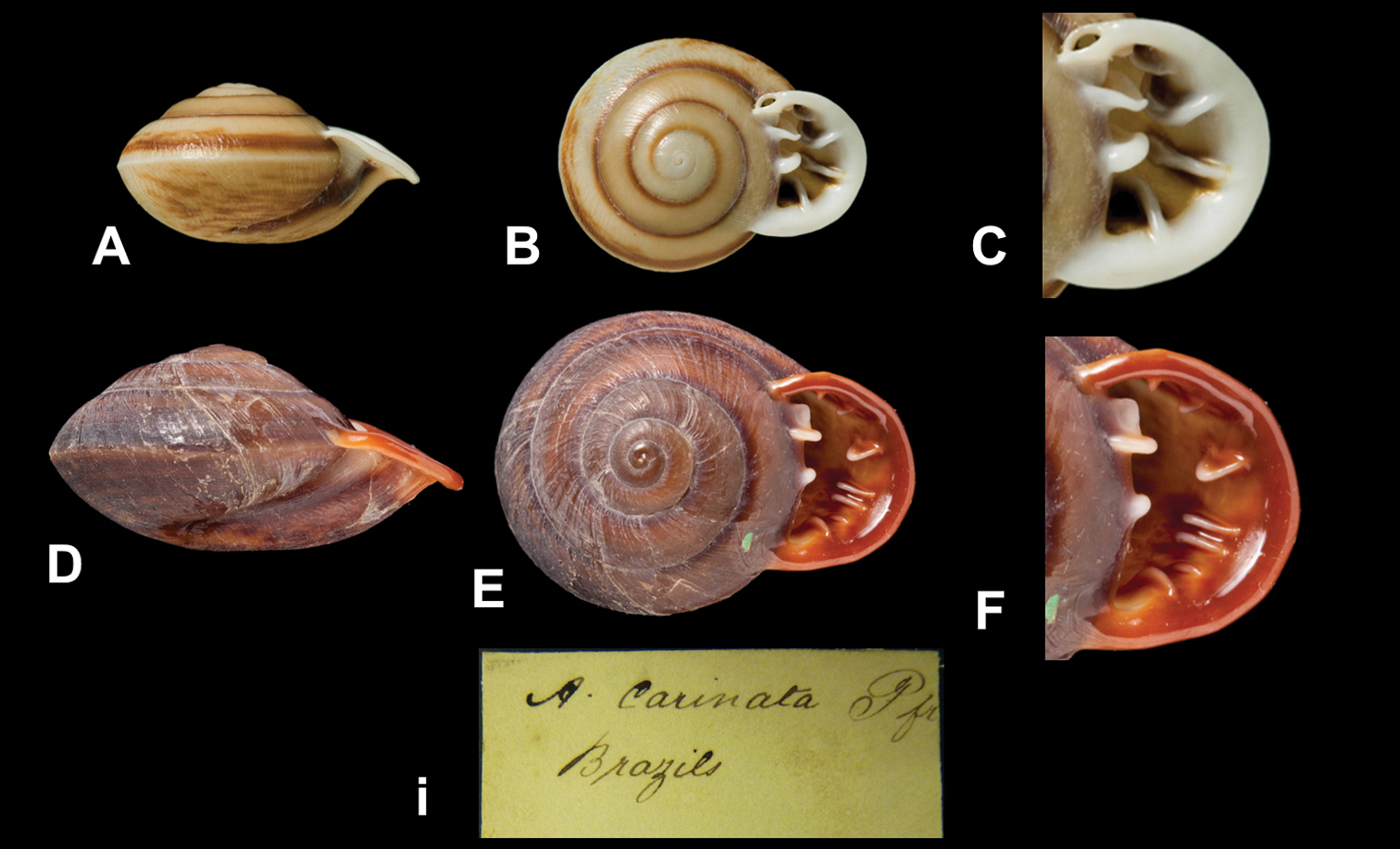
Figura: Breure A, Ablett J (2012): (A–C, i) Anostoma carinatum (Pfeiffer, 1853), provável SYNTYPE NHMUK 20100509 (D = 24.3mm); (D–F) Anostoma brunneum Verdcourt, 1991, HOLOTYPE NHMUK 1990126 (D = 32.6mm)
Fontes:
Descrição original: (como Anostoma octodentatum brunneum Verdcourt, 1992) Verdcourt, B. (1992). A new Anostoma from Brazil (Gastropoda: Pulmonata: Bulimulidae). Journal of Conchology. 34: página (s) 81–82, disponível online em https://www.biodiversitylibrary.org/part/408713
Simone, L. R. L. (2006). Land and Freshwater Molluscs of Brazil. Editora Gráfica Bernardi, FAPESP. São Paulo, 390 pp. página(s): 174
Breure A, Ablett J (2012) Annotated type catalogue of the Bothriembryontidae and Odontostomidae (Mollusca, Gastropoda, Orthalicoidea) in the Natural History Museum, London. ZooKeys 182: 1-70, disponível online em https://doi.org/10.3897/zookeys.182.2720
Molluscabase: https://www.molluscabase.org/aphia.php?p=taxdetails&id=1328275