
Rectartemon piquetensis (Pilsbry, 1930)
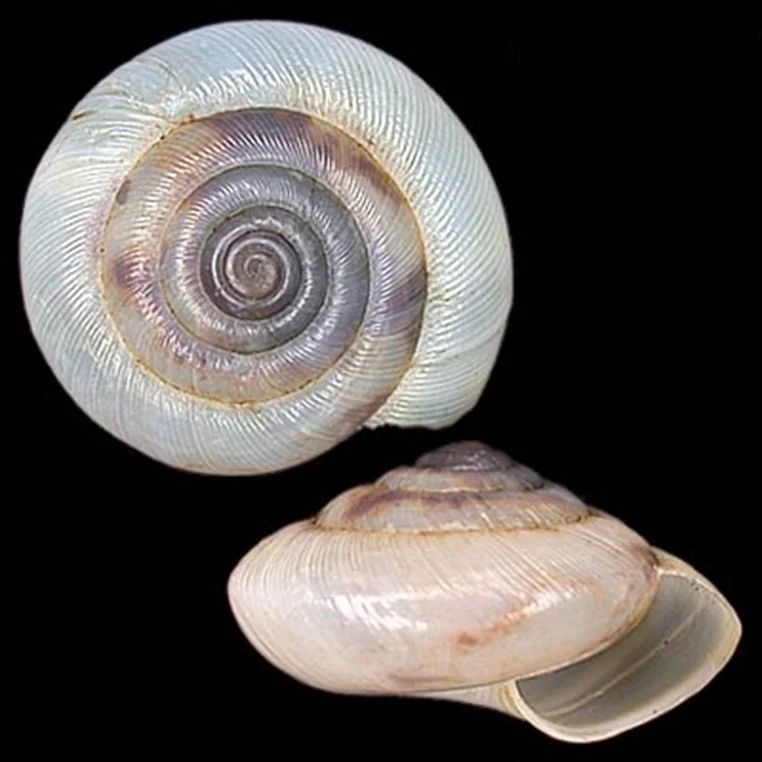
- (1) Rectartemon piquetensis, cortesia Femorale, São Paulo; (2) The Academy of Natural Sciences, Philadelphia: HOLOTYPE de Artemon intermedius piquetensis, ANSP 47581, proveniente de Piquete, São Paulo, doador: H. von Ihering, 1920
- Classe
- Gastropoda
- Família
- STREPTAXIDAE
- Tamanho
- 28 - 34 mm
- Habitat
- vive no solo, sob folhas, ou enterrado parte do tempo
- Localidade tipo
- Brasil, São Paulo, Piquete
- Nome original
- Artemon intermedius piquetensis Pilsbry, 1930
Distribuição
Ocorrência: Brasil (São Paulo)
Etimologia
o nome da espécie é uma referência à localidade tipo
Figuras
Salvador R.B. (2018): (1–3) Rectartemon depressus, MZSP 125447 (H = 11.7 mm, D = 18.7 mm); (4–6) Rectartemon iguapensis, MZSP 133139 (H = 9.8 mm, D = 14.8 mm); (7–9) Rectartemon piquetensis, MZSP 133139 (H = 14.2 mm, D = 21.0 mm); (10–12) Streptartemon extraneus, specimen #1, MZSP 123558 (H = 6.1 mm, D = 7.2 mm); (13) Streptartemon extraneus, specimen #2, MZSP 123558 (H = 6.6 mm, D = 6.7 mm)
Referências
Descrição original
- (Pilsbry, 1930): "The shell is perspectively umbilicate (the width of umbilicus contained about 43 times in that of the shell); depressed, with conoidal spire and indistinctly subangular periphery. Whorls barely 7, rather convex; the suture well impressed. Sculpture: the first 21 whorls smooth, following whorls with slightly curved, retractive rib-striae, fine on the earlier whorls, rather coarse on the last whorl, where they weaken at the periphery, leaving the base nearly smooth, but with some weak traces of the rib-striae in places.
- It also shows linear brownish growth-rests, three in the type, two in a paratype. The aperture is moderately oblique, rotund-lunate. Peristome thin, unexpanded and arching forward above, the outer margin somewhat expanded, the basal decidedly so, subreflexed at the edge; insertions of peristome connected by a thin white callus."
- (como Artemon intermedius piquetensis Pilsbry, 1930) Pilsbry, H. A. (1930). South American land and freshwater mollusks. Notes and description, 7. Proceedings of the Academy of Natural Sciences of Philadelphia. 82: 355-365. — p. 365, pl. 32, figs. 5a–b
- Simone, L. R. L. (2006). Land and Freshwater Molluscs of Brazil. Editora Gráfica Bernardi, FAPESP. São Paulo, 390 pp. — p. 199
- Brown, K. (2023). A guide to the hunter shells. Vol. 2. The Streptaxoidea. The Enneinae, Orthogibbinae, Marconiinae, Odontartemoninae, Streptaxinae and the Diapheridae. ConchBooks, Germany. — p. 334
- Salvador R.B. (2018). Notes on a new collection of Streptaxidae (Gastropoda: Stylommatophora) from Brazil, with descriptions of two new species of Streptaxis. Integrative Systematics. 1: 25-33., disponível online em https://doi.org/10.18476/insy.v01.a4 — p. 27, figs 7-9
Texto original da ficha (para comparação durante os testes)
CLASSE: GASTROPODA: TERRESTRE
FAMÍLIA: STREPTAXIDAE
ESPÉCIE: Rectartemon piquetensis (Pilsbry, 1930)
Tamanho médio: 28 – 34 mm
Habitat: vive no solo, sob folhas, ou enterrado parte do tempo
Ocorrência: Brasil (São Paulo)
Localidade tipo: Brasil, São Paulo, Piquete
Nome original: Artemon intermedius piquetensis Pilsbry, 1930
Etimologia: o nome da espécie é uma referência à localidade tipo
Descrição original:
(Pilsbry, 1930): “The shell is perspectively umbilicate (the width of umbilicus contained about 43 times in that of the shell); depressed, with conoidal spire and indistinctly subangular periphery. Whorls barely 7, rather convex; the suture well impressed. Sculpture: the first 21 whorls smooth, following whorls with slightly curved, retractive rib-striae, fine on the earlier whorls, rather coarse on the last whorl, where they weaken at the periphery, leaving the base nearly smooth, but with some weak traces of the rib-striae in places.
It also shows linear brownish growth-rests, three in the type, two in a paratype. The aperture is moderately oblique, rotund-lunate. Peristome thin, unexpanded and arching forward above, the outer margin somewhat expanded, the basal decidedly so, subreflexed at the edge; insertions of peristome connected by a thin white callus.”
Fotos: (1) Rectartemon piquetensis, cortesia Femorale, São Paulo; (2) The Academy of Natural Sciences, Philadelphia: HOLOTYPE de Artemon intermedius piquetensis, ANSP 47581, proveniente de Piquete, São Paulo, doador: H. von Ihering, 1920
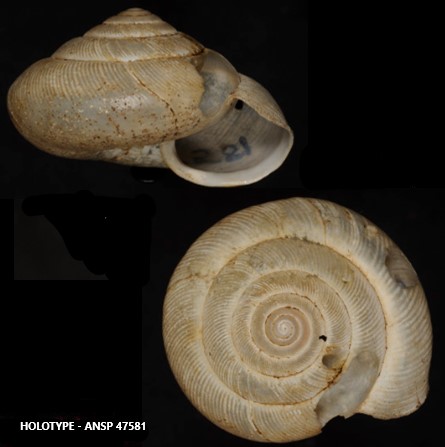
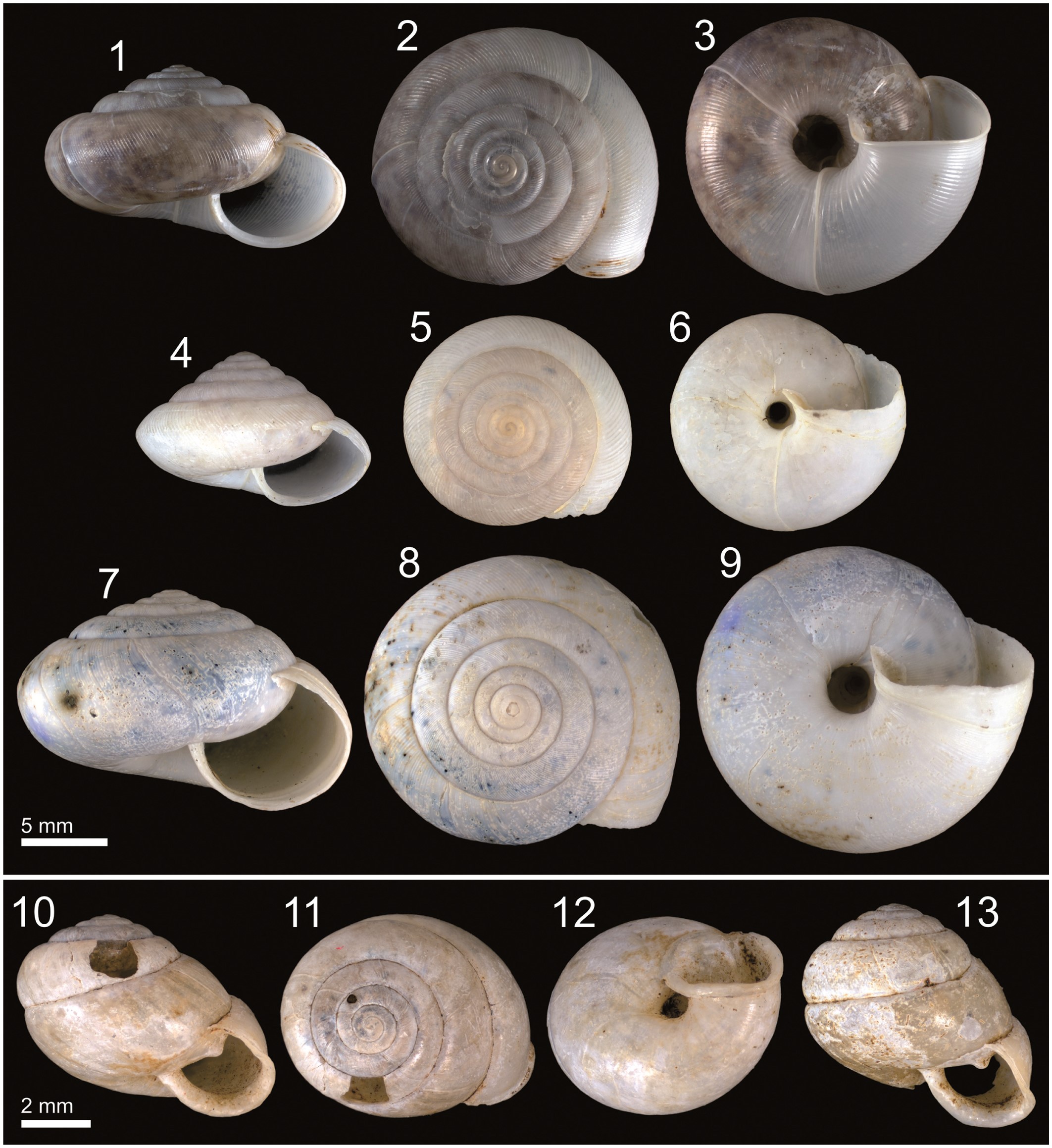
Figura: Salvador R.B. (2018): (1–3) Rectartemon depressus, MZSP 125447 (H = 11.7 mm, D = 18.7 mm); (4–6) Rectartemon iguapensis, MZSP 133139 (H = 9.8 mm, D = 14.8 mm); (7–9) Rectartemon piquetensis, MZSP 133139 (H = 14.2 mm, D = 21.0 mm); (10–12) Streptartemon extraneus, specimen #1, MZSP 123558 (H = 6.1 mm, D = 7.2 mm); (13) Streptartemon extraneus, specimen #2, MZSP 123558 (H = 6.6 mm, D = 6.7 mm)
Fontes:
Descrição original: (como Artemon intermedius piquetensis Pilsbry, 1930) Pilsbry, H. A. (1930). South American land and freshwater mollusks. Notes and description, 7. Proceedings of the Academy of Natural Sciences of Philadelphia. 82: 355-365.
página(s): 365, pl. 32, figs. 5a–b
Simone, L. R. L. (2006). Land and Freshwater Molluscs of Brazil. Editora Gráfica Bernardi, FAPESP. São Paulo, 390 pp.
página(s): 199
Brown, K. (2023). A guide to the hunter shells. Vol. 2. The Streptaxoidea. The Enneinae, Orthogibbinae, Marconiinae, Odontartemoninae, Streptaxinae and the Diapheridae. ConchBooks, Germany.
página: 334
Salvador R.B. (2018). Notes on a new collection of Streptaxidae (Gastropoda: Stylommatophora) from Brazil, with descriptions of two new species of Streptaxis. Integrative Systematics. 1: 25-33., disponível online em https://doi.org/10.18476/insy.v01.a4
página(s): 27, figs 7-9
MolluscaBase: https://www.molluscabase.org/aphia.php?p=taxdetails&id=1317076