
Similipecten nanus (Verril & Bush, 1897)
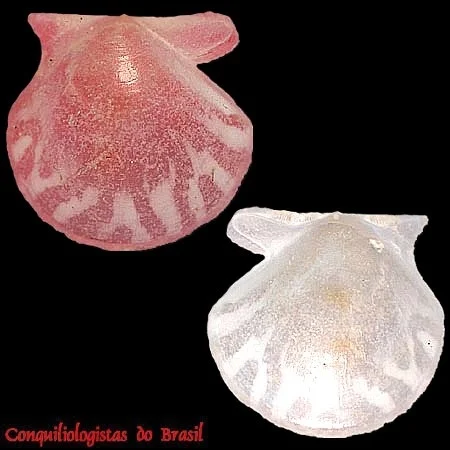
- Foto A: Rio Grande, RS. Col.UFRGS - Universidade Federal do Rio Grande do Sul. Foto: Fabio Wiggers
- Ilustração: Prof. Sergio A. Vanin
- Classe
- Bivalvia
- Família
- PROPEAMUSSIIDAE
- Tamanho
- 3 - 5 mm
- Profundidade
- 35 - 550 m
- Habitat
- em fundos de areia, lama e lama arenosa (Amaral et al 2006; Mikkelsen & Bieler 2008).
- Alimentação
- filtrador
- Localidade tipo
- Havana, Cuba
Distribuição
No Brasil: AP até RS, Fernando de Noronha e Abrolhos
Sinônimos
- Cyclopecten nanus Verril & Bush, 1897
- Chlamys nanus (Verril & Bush, 1897)
Referências
Descrição original
- Verrill, A. E. (1897). A study of the family Pectinidae, with a revision of the genera and subgenera. Transactions of the Connecticut Academy of Arts and Sciences. 10: 41-95, pls. 16-21., available online at http://biodiversitylibrary.org/page/13456846 page(s): 85-87, pl. 16 fig. 12-12c
Texto original da ficha (para comparação durante os testes)
CLASSE: BIVALVIA: MARINHA
FAMÍLIA: PROPEAMUSSIIDAE
ESPÉCIE: Similipecten nanus (Verril & Bush, 1897)
Tamanho médio: 3 – 5 mm
Profundidade: 35 – 550 m
Habitat: em fundos de areia, lama e lama arenosa (Amaral et al 2006; Mikkelsen & Bieler 2008).
Alimentação: filtrador
Frequência: rara
Ocorrência no Brasil: AP até RS, Fernando de Noronha e Abrolhos
Localidade Tipo: Havana, Cuba
Sinônimos: Cyclopecten nanus Verril & Bush, 1897; Chlamys nanus (Verril & Bush, 1897).
Descrição original: Verrill, A. E. (1897). A study of the family Pectinidae, with a revision of the genera and subgenera. Transactions of the Connecticut Academy of Arts and Sciences. 10: 41-95, pls. 16-21., available online at http://biodiversitylibrary.org/page/13456846 page(s): 85-87, pl. 16 fig. 12-12c
WoRMS: https://www.marinespecies.org/aphia.php?p=taxdetails&id=391738
Malacolog: http://www.malacolog.org/search.php?mode=details&waspid=10129
Foto A: Rio Grande, RS. Col.UFRGS – Universidade Federal do Rio Grande do Sul. Foto: Fabio Wiggers
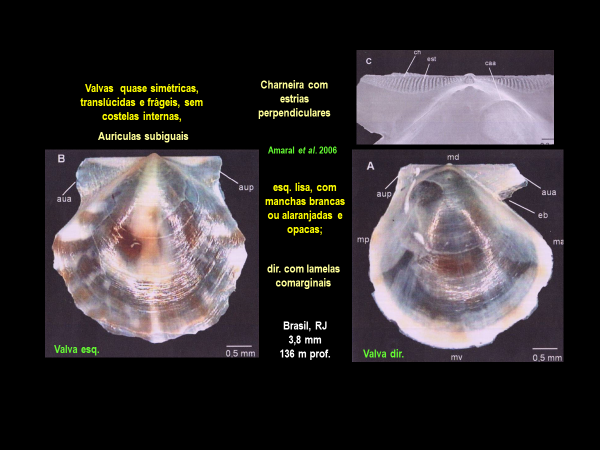
Ilustração: Prof. Sergio A. Vanin