
Drymaeus rex Breure, 2009
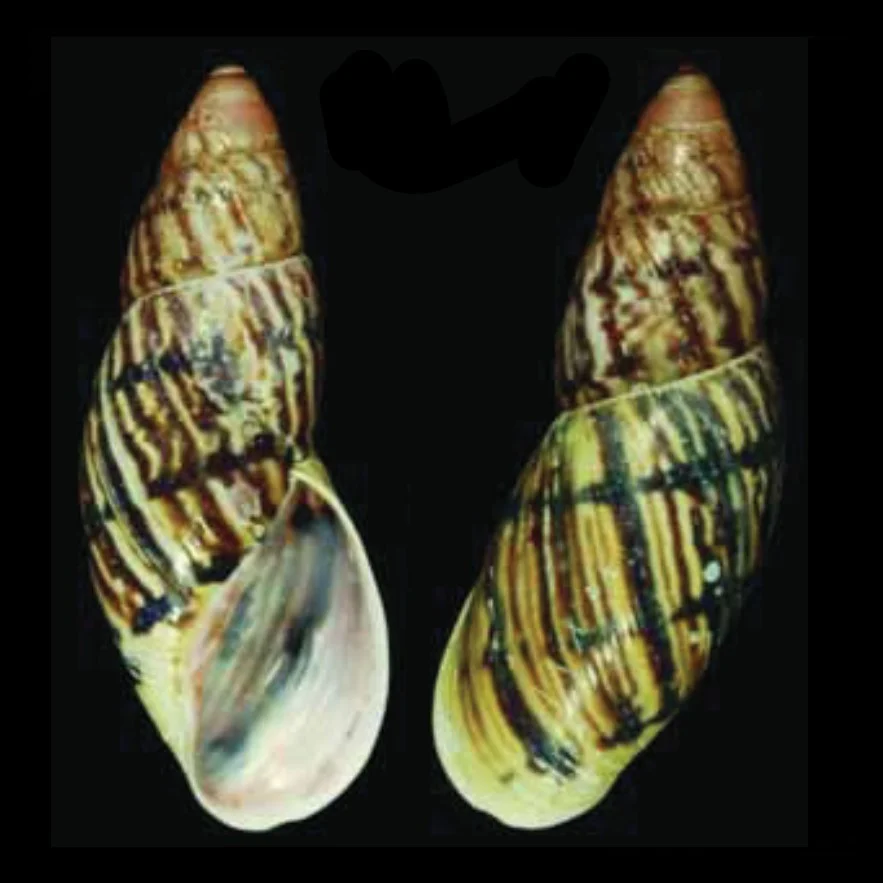
- (1) Breure, 2009: Florida Museum of Natural History, Gainesville, HOLOTYPE UF 284726, Venezuela, Amazonas, Rio Negro, "High Camp Vii on Neblina Massif, NE of Pico Phelps", 31.i.1985, 1800m de altitude, 39.2mm
- Classe
- Gastropoda
- Família
- BULIMULIDAE
- Tamanho
- 40 mm
- Altitude
- 1300 - 1800 m
- Habitat
- vive em árvores e arbustos
- Localidade tipo
- Venezuela, Estado Amazonas, "Cerro de la Neblina massif, 5.3 km NE Pico Phelps at the base of the escarpment 1 km NE Pico Maguire". O Pico da Neblina está na fronteira entre Brasil e Venezuela
- Nome original
- Drymaeus (Drymaeus) rex Breure, 2009
Distribuição
Ocorrência: Venezuela (Amazonas), Brasil (?)
Etimologia
o nome da espécie vem do Latim "Rex", rei (king). "Nome dado em homenagem a Roy W. McDiarmid (1940 - ), que coletou a maior parte do material-tipo. “Roy” é a palavra do francês antigo para rei, mas também a grafia anglicizada de um apelido escocês Ruadh gaélico (vermelho, referindo-se ao ápice avermelhado em alguns exemplares). O nome também se refere ao majestoso aparecimento desta espécie quando coletada viva." Roy MacDiarmid é zoólogo, biólogo, com diversos trabalhos sobre répteis e anfíbios nos Neotrópicos, e curador emérito do Smithsonian National Museum of Natural History
Figuras
Breure, 2009: (A─C) Drymaeus extraneus (Haas, 1955); (A─B) HOLOTYPE FMNH 49736; (C) FMNH 49734; (D─F) Drymaeus steyermarki (Haas, 1955), HOLOTYPE FMNH 49735; ( G─H) Drymaeus yapacanensis Breure & Eskens, 1981, HOLOTYPE RMNH 55331; (I─S) Drymaeus rex; (I─M, Q─S) PARATYPES UF 284745, 284730, 284759, 284748, 284714, 284719, 284719 e 284715 respectivamente; (N─P) HOLOTYPE UF 284726
Referências
Descrição original
- (Breure, 2009): "Shell up to 40.7 mm (further dimension given in Table 1), 2.2 times longer than wide, narrowly rimate with rather convex sides, rather elongated, solid. Colour very variable, whitish-yellowish to yellowish-brown, with the following patterns: a) chestnut-brown axial streaks and three, darker interrupted spiral bands; b) with axial chestnut-brown streaks of varying width, sometimes coalescing; c) axial streaks chestnut-brown and zig-zagging.
- The spiral bands, if present, are evenly spaced on the last whorl, one at the periphery. Upper whorls in the same ground colour as the rest of the shell or with a pinkish hue; in the latter case the apex is dark reddish-black.
- Surface somewhat shining, in most cases dull; the upper whorls smooth, on the remaining whorls the growth striae are slightly thickened, most noticeable on the third and fourth whorl. Protoconch with a grating sculpture of axial riblets and spiral striae, which are of equal strength. Whorls 5.2, rather convex; suture slightly impressed and bordered by a whitish to yellowish line below.
- Aperture elongate-ovate, 1.8 times longer than wide, 0.52 times the total length. Peristome thin, expanded, especially below, whitish with a pink or orange border inside. Columellar margin curved, reflexed, dilated above and receding. Parietal wall with a thin callus, with a pink or orange hue."
- (como Drymaeus (Drymaeus) rex Breure 2009) Breure, Abraham S. H., 2009, New Orthalicidae (Mollusca, Gastropoda) from Venezuelan Guayana: unravelling secrets from the Lost World, Zootaxa 2065, pp. 25-50 : página(s) 41-43, disponível online em https://www.researchgate.net/publication/289641789_New_Orthalicidae_Mollusca_Gastropoda_From_Venezuelan_Guayana_Unravelling_Secrets_From_The_Lost_World — p. 41, figs 7, 8I-S
Texto original da ficha (para comparação durante os testes)
CLASSE: GASTROPODA: TERRESTRE
FAMÍLIA: BULIMULIDAE
ESPÉCIE: Drymaeus rex Breure, 2009
Tamanho médio: 40 mm
Habitat: vive em árvores e arbustos
Ocorrência: Venezuela (Amazonas), Brasil (?)
Localidade tipo: Venezuela, Estado Amazonas, “Cerro de la Neblina massif, 5.3 km NE Pico Phelps at the
base of the escarpment 1 km NE Pico Maguire”. O Pico da Neblina está na fronteira entre Brasil e Venezuela
Altitude: 1300 – 1800 m
Nome original: Drymaeus (Drymaeus) rex Breure, 2009
Etimologia: o nome da espécie vem do Latim “Rex”, rei (king). “Nome dado em homenagem a Roy W. McDiarmid (1940 – ), que coletou a maior parte do material-tipo. “Roy” é a palavra do francês antigo para rei, mas também a grafia anglicizada de um apelido escocês Ruadh gaélico (vermelho, referindo-se ao ápice avermelhado em alguns exemplares). O nome também se refere ao majestoso aparecimento desta espécie quando coletada viva.” Roy MacDiarmid é zoólogo, biólogo, com diversos trabalhos sobre répteis e anfíbios nos Neotrópicos, e curador emérito do Smithsonian National Museum of Natural History
Descrição original:
(Breure, 2009): “Shell up to 40.7 mm (further dimension given in Table 1), 2.2 times longer than wide, narrowly rimate with rather convex sides, rather elongated, solid. Colour very variable, whitish-yellowish to yellowish-brown, with the following patterns: a) chestnut-brown axial streaks and three, darker interrupted spiral bands; b) with axial chestnut-brown streaks of varying width, sometimes coalescing; c) axial streaks chestnut-brown and zig-zagging.
The spiral bands, if present, are evenly spaced on the last whorl, one at the periphery. Upper whorls in the same ground colour as the rest of the shell or with a pinkish hue; in the latter case the apex is dark reddish-black.
Surface somewhat shining, in most cases dull; the upper whorls smooth, on the remaining whorls the growth striae are slightly thickened, most noticeable on the third and fourth whorl. Protoconch with a grating sculpture of axial riblets and spiral striae, which are of equal strength. Whorls 5.2, rather convex; suture slightly impressed and bordered by a whitish to yellowish line below.
Aperture elongate-ovate, 1.8 times longer than wide, 0.52 times the total length. Peristome thin, expanded, especially below, whitish with a pink or orange border inside. Columellar margin curved, reflexed, dilated above and receding. Parietal wall with a thin callus, with a pink or orange hue.”
Fotos: (1) Breure, 2009: Florida Museum of Natural History, Gainesville, HOLOTYPE UF 284726, Venezuela, Amazonas, Rio Negro, “High Camp Vii on Neblina Massif, NE of Pico Phelps”, 31.i.1985, 1800m de altitude, 39.2mm
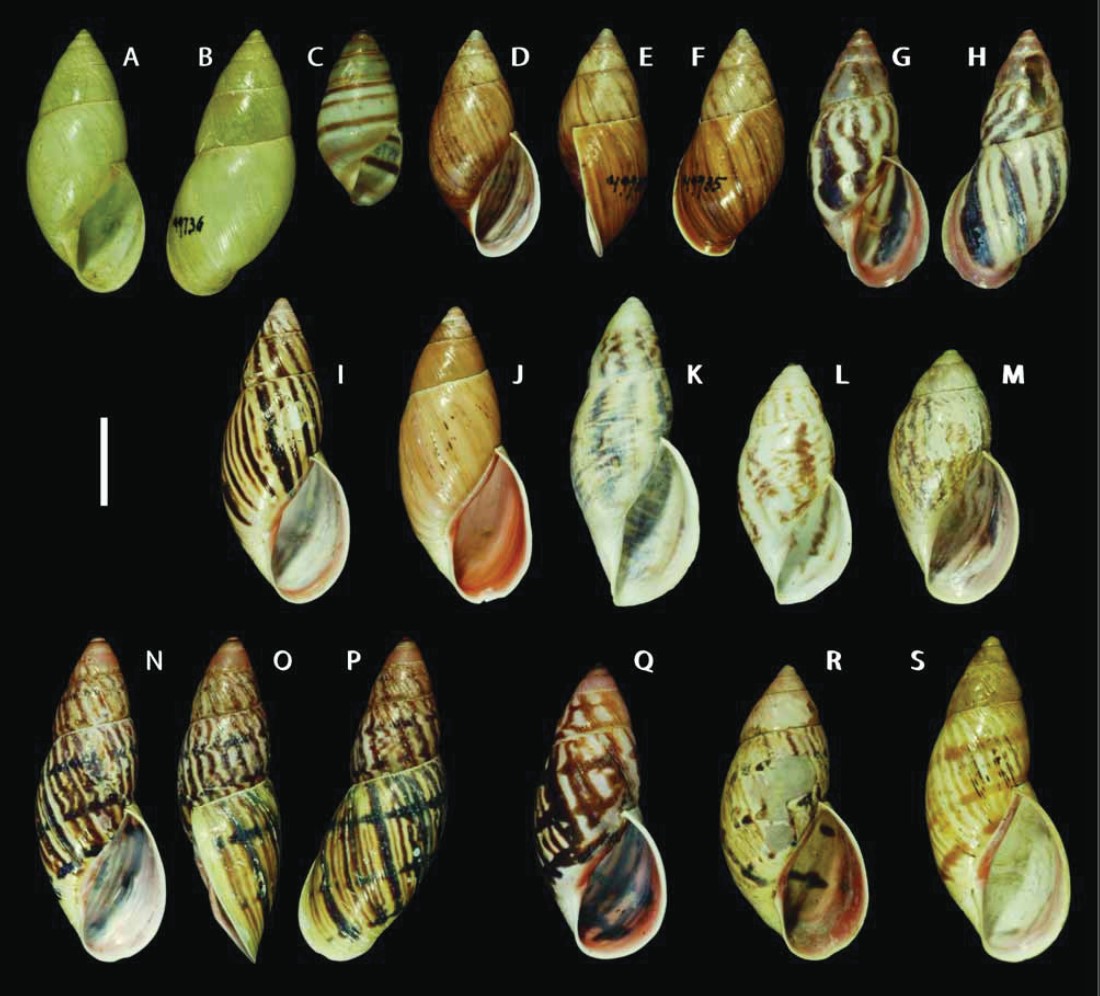
Figura: Breure, 2009: (A─C) Drymaeus extraneus (Haas, 1955); (A─B) HOLOTYPE FMNH 49736; (C) FMNH 49734; (D─F) Drymaeus steyermarki (Haas, 1955), HOLOTYPE FMNH 49735; ( G─H) Drymaeus yapacanensis Breure & Eskens, 1981, HOLOTYPE RMNH 55331; (I─S) Drymaeus rex; (I─M, Q─S) PARATYPES UF 284745, 284730, 284759, 284748, 284714, 284719, 284719 e 284715 respectivamente; (N─P) HOLOTYPE UF 284726
Fontes:
Descrição original: (como Drymaeus (Drymaeus) rex Breure 2009) Breure, Abraham S. H., 2009, New Orthalicidae (Mollusca, Gastropoda) from Venezuelan Guayana: unravelling secrets from the Lost World, Zootaxa 2065, pp. 25-50 : página(s) 41-43, disponível online em https://www.researchgate.net/publication/289641789_New_Orthalicidae_Mollusca_Gastropoda_From_Venezuelan_Guayana_Unravelling_Secrets_From_The_Lost_World
página(s): 41, figs 7, 8I-S
MolluscaBase: https://www.molluscabase.org/aphia.php?p=taxdetails&id=1806912