
Plekocheilus labiosus Borrero & Breure, 2011
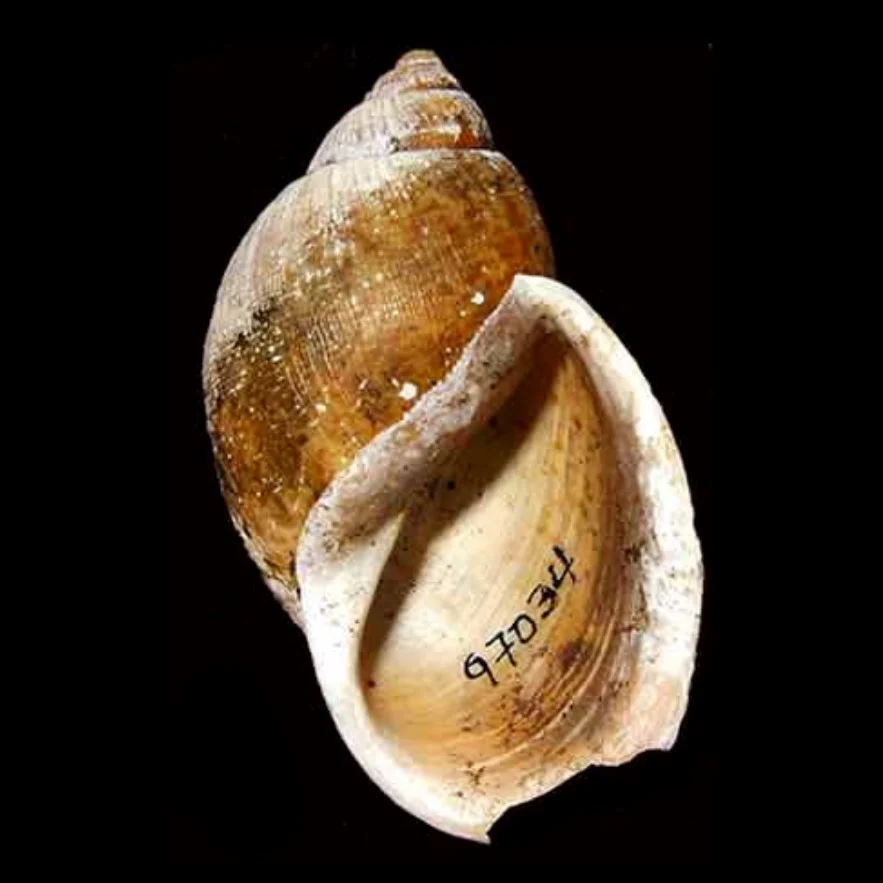
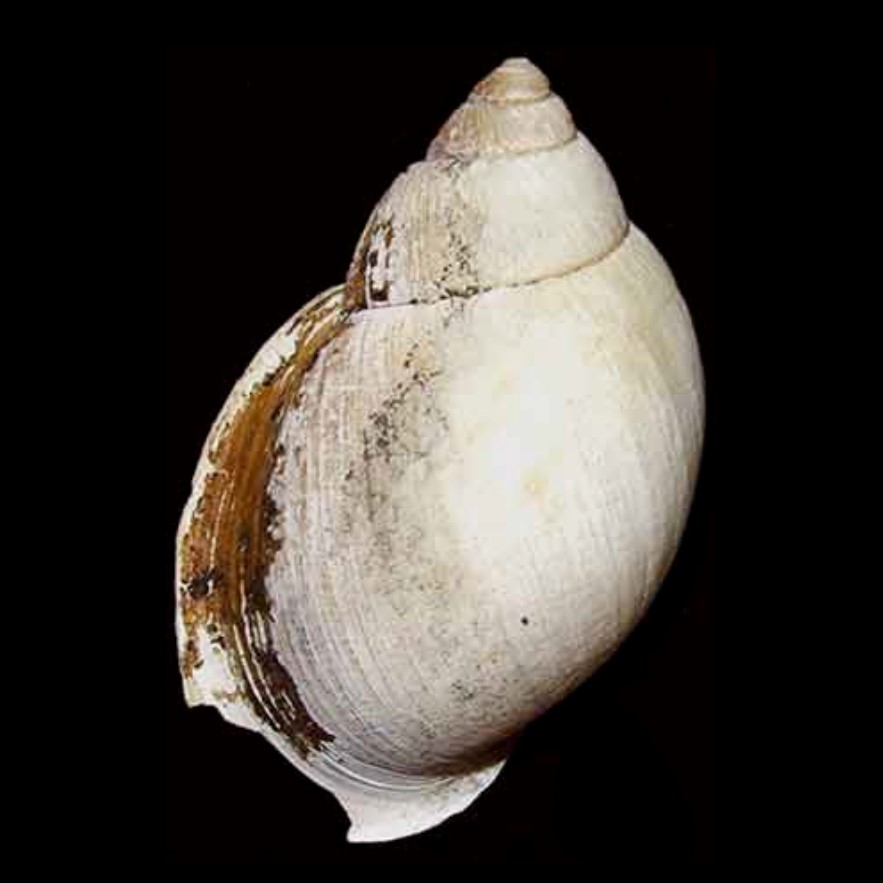
- (1,2) Borrero & Breure, 2011: Universidad del Valle - Zoología, Cali, Colombia, HOLOTYPE de Plekocheilus labiosus, UVZ 97034, C. Alvarez leg., ii.1997, 40.2mm
- Classe
- Gastropoda
- Família
- AMPHIBULIMIDAE
- Tamanho
- 40 mm
- Altitude
- 3100 m
- Habitat
- O holótipo foi encontrado morto “entre pedras, com gramíneas e árvores isoladas”
- Localidade tipo
- Colômbia, Cundinamarca, Parque Nacional Chingaza, "Embalse de Chuza"
- Nome original
- Plekocheilus (Eurytus) labiosus Borrero & Breure, 2011
Distribuição
Ocorrência: Colômbia, Cundinamarca
Etimologia
o nome da espécie deriva da palavra em Latim "labiosus", que possue lábios grandes, uma referência ao perístoma notavelmente expandido desta espécie
Descrição
(Borrero & Breure, 2011): "Shell 40.2 mm, about 1.63 times longer than wide, imperforate, ovate, sides strongly convex, relatively thick. Periostracum very thin, honey in color. Shell color pattern consisting of irregularly arranged light brown blotches, but these do not coalesce into a pattern. Surface (hardly) shining, sculptured with more or less regularly spaced, fine axial growth striae (37 to a centimeter in the ventral portion of the last whorl). Each stria consists of series of short sections or elongated granules, regularly interrupted by lower and shorter longitudinal sections, giving the impression that the striae are “beaded,” quite noticeable under magnification.
The lower sections are also arranged in a uniform manner, so a spiral pattern of grooves is formed, only evident under magnification. This pattern is present in all sub-apical whorls, but is stronger in the body whorl. Protoconch partly eroded, but with what may be a granular sculpture, thus not inconsistent with that typical of Plekocheilus (Eurytus) (Breure 1979) .
Whorls 5.5, convex, more so the last whorl; suture simple, impressed, hardly descending, going up again before the attachment of the outer lip to the last whorl. Aperture sub-ovate, about 1.6 times as long as wide and about 0.69 times the total shell height; color within light brown, with a few irregular spots of the same color as those in the external coloration. Columellar margin straight initially, then bending to an angle of about 140° between the upper and lower portions; a well defined columellar fold is present midway. Peristome very expanded and reflexed, but not thickened; the widest portion approximately 1/6 of the aperture width. Parietal wall with a thin, white callus."
Referências
Descrição original
- (como Plekocheilus (Eurytus) labiosus Borrero & Breure, 2011) Borrero, F. J.; Breure, A. S. H. (2011). The Amphibulimidae (Mollusca: Gastropoda: Orthalicoidea) from Colombia and adjacent areas. Zootaxa. 3054, 1-59. — p. 47, fig. 12A, 18H-I
Texto original da ficha (para comparação durante os testes)
CLASSE: GASTROPODA: TERRESTRE
FAMÍLIA: AMPHIBULIMIDAE
ESPÉCIE: Plekocheilus labiosus Borrero & Breure, 2011
Tamanho médio: 40 mm
Ocorrência: Colômbia, Cundinamarca
Localidade tipo: Colômbia, Cundinamarca, Parque Nacional Chingaza, “Embalse de Chuza”
Altitude: 3100 m
Habitat: O holótipo foi encontrado morto “entre pedras, com gramíneas e árvores isoladas”
Nome original: Plekocheilus (Eurytus) labiosus Borrero & Breure, 2011
Etimologia: o nome da espécie deriva da palavra em Latim “labiosus“, que possue lábios grandes, uma referência ao perístoma notavelmente expandido desta espécie
Descrição:
(Borrero & Breure, 2011): “Shell 40.2 mm, about 1.63 times longer than wide, imperforate, ovate, sides strongly convex, relatively thick. Periostracum very thin, honey in color. Shell color pattern consisting of irregularly arranged light brown blotches, but these do not coalesce into a pattern. Surface (hardly) shining, sculptured with more or less regularly spaced, fine axial growth striae (37 to a centimeter in the ventral portion of the last whorl). Each stria consists of series of short sections or elongated granules, regularly interrupted by lower and shorter longitudinal sections, giving the impression that the striae are “beaded,” quite noticeable under magnification.
The lower sections are also arranged in a uniform manner, so a spiral pattern of grooves is formed, only evident under magnification. This pattern is present in all sub-apical whorls, but is stronger in the body whorl. Protoconch partly eroded, but with what may be a granular sculpture, thus not inconsistent with that typical of Plekocheilus (Eurytus) (Breure 1979) .
Whorls 5.5, convex, more so the last whorl; suture simple, impressed, hardly descending, going up again before the attachment of the outer lip to the last whorl. Aperture sub-ovate, about 1.6 times as long as wide and about 0.69 times the total shell height; color within light brown, with a few irregular spots of the same color as those in the external coloration. Columellar margin straight initially, then bending to an angle of about 140° between the upper and lower portions; a well defined columellar fold is present midway. Peristome very expanded and reflexed, but not thickened; the widest portion approximately 1/6 of the aperture width. Parietal wall with a thin, white callus.”
Fotos: (1,2) Borrero & Breure, 2011: Universidad del Valle – Zoología, Cali, Colombia, HOLOTYPE de Plekocheilus labiosus, UVZ 97034, C. Alvarez leg., ii.1997, 40.2mm
Fontes:
Descrição original: (como Plekocheilus (Eurytus) labiosus Borrero & Breure, 2011) Borrero, F. J.; Breure, A. S. H. (2011). The Amphibulimidae (Mollusca: Gastropoda: Orthalicoidea) from Colombia and adjacent areas. Zootaxa. 3054, 1-59.
página(s): 47, fig. 12A, 18H-I
MolluscaBase: https://www.molluscabase.org/aphia.php?p=taxdetails&id=1263440